Skip to content
  • Home
  • About
  • Facebook
  • LinkedIn
  • Twitter
  • Instagram
  • Food
  • Libations & Wine
  • Uncategorized
  • Travel
  • Facebook
  • LinkedIn
  • Twitter
  • Instagram

A Magnolia's Culinary Chronicles

Not all those who wander are lost – J.R.R. Tolkien

  • Home
  • About
  • Food

Mediterranean Lamb & Eggplant Magic

amagnoliasculinarychronicles's avatar amagnoliasculinarychronicles September 1, 2018

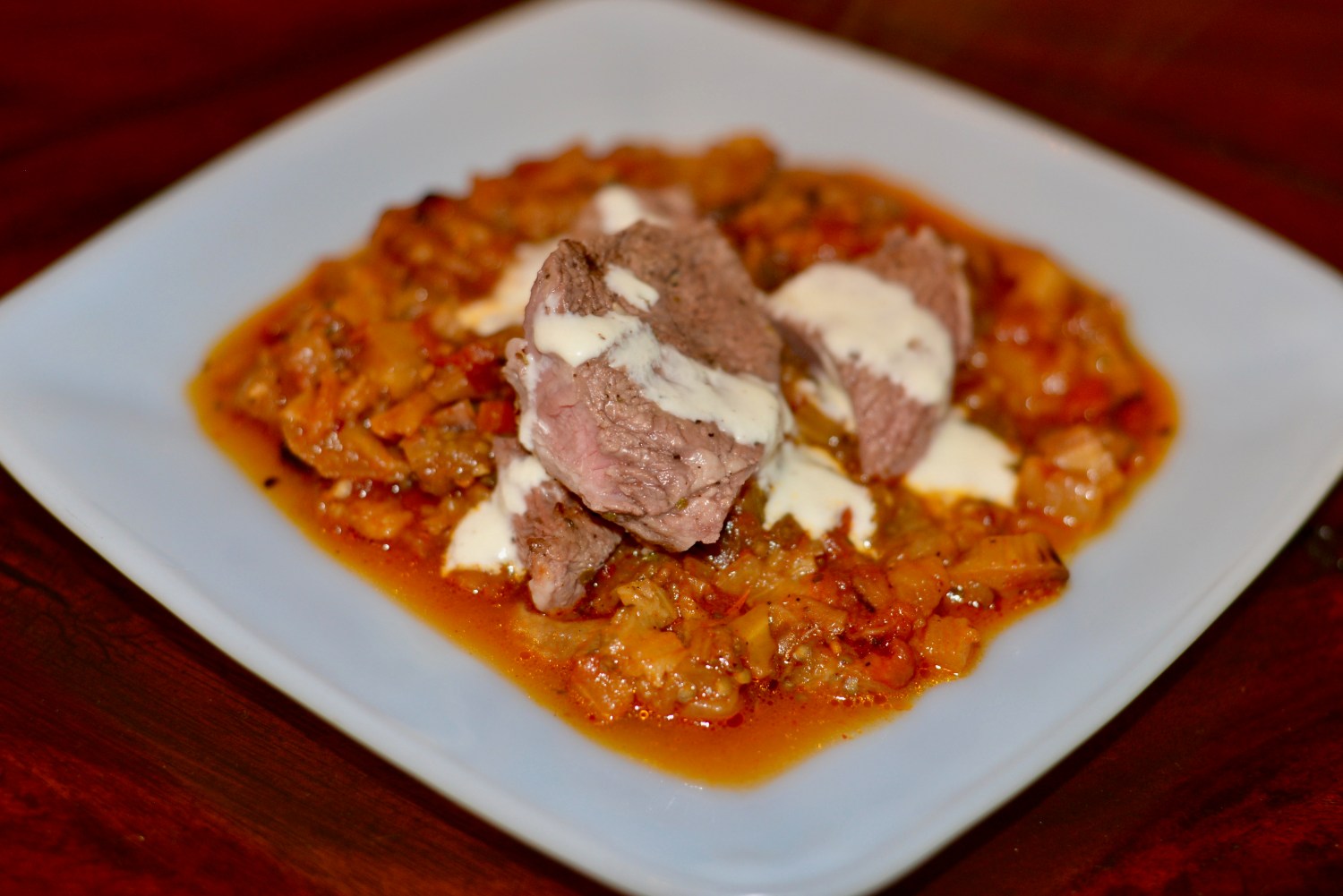
We spent a weekend away in Greenville, South Carolina last month where we grazed at The Lazy Goat, which I highly recommend, and the unexpected marriage of flavors left such a lasting impression that I’ve been haunted by its lingering memory since. It’s a Mediterranean mashup up of Greek and Moroccan flavors that just jive across the palate like enchanting, near discordant jazz. I’ve tried a few different preparations to recreate the experience of their Greek Lamb and Moroccan Eggplant Zaalook and have come up with a winning roadmap at last! If you can find it, snag a bottle of Chateau Musar Rouge from Lebanon’s Bekaa Valley for a pairing that will simple dazzle.

Greek Lamb:

This mixture is a solid Greek marinade that does divine things with lamb, but its also a sure fire way to liven up even a dull chicken breast. It’s quick, painless and I use it on the regular in our house.

  • 1 tablespoon oregano
  • 2 cloves garlic, minced
  • 1 shallot, minced
  • 1 teaspoon lemon zest
  • juice of 1 lemon
  • 2 tablespoons olive oil
  • 1 ½ lb lamb (shoulder or chops)

Combine all the ingredients and marinate the lamb for at least one hour (four if you can). Although I used lamb shoulder, which I love for its touch of grain and soft beautiful texture, lamb chops are lovely with this dish as well. Grill over medium-high heat for four minutes on each side. Simple as that!

In the meantime, whip up your favorite batch of tzatziki sauce. I find this recipe to be ideal if you’re in need of a foolproof tzatziki.

IMG_6806

Moroccan Eggplant Zaalook:

  • 5 Japanese eggplant (or as slender as you can find them)
  • 2 large tomatoes
  • 3 cloves garlic, minced
  • 1 ½ teaspoons paprika
  • ½ teaspoon red chile flakes (I prefer guajillo)
  • 1 bay leaf
  • ½ cup water
  • olive oil
  • salt and pepper to taste

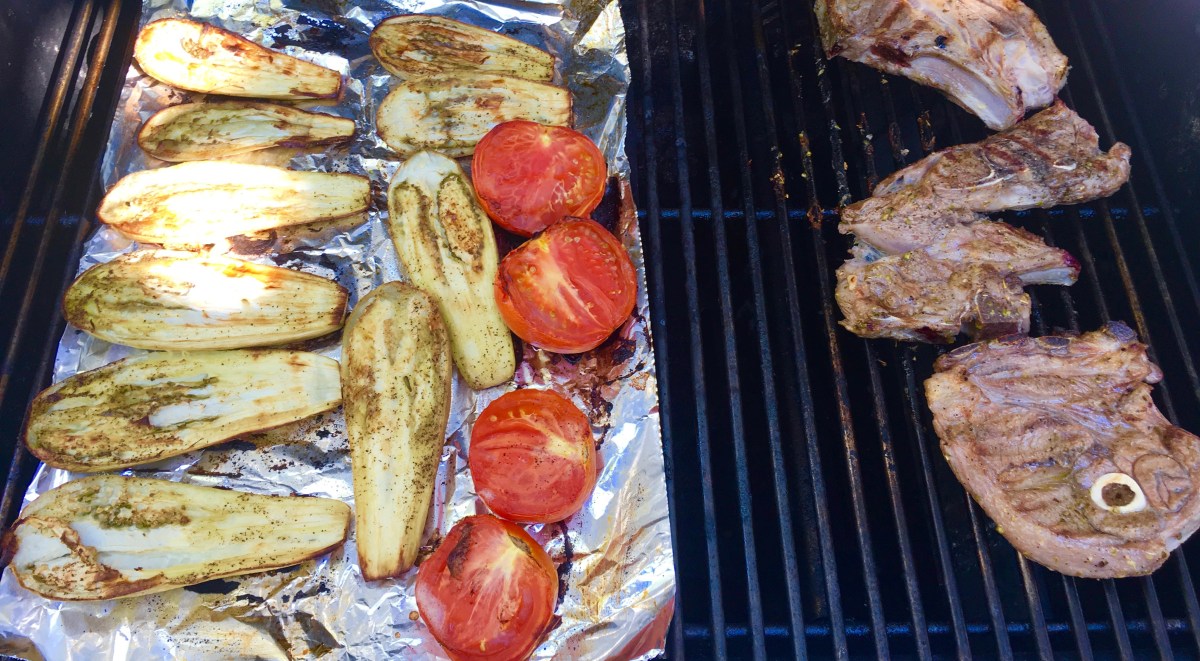
I like to think of Eggplant Zaalook as Ratatouille’s exotic, Moroccan cousin. Like the famed French side dish, when done well, Zaalook can effortlessly steal the show. Although you can sauté or oven roast the eggplant, I prefer to grill them on a sheet of aluminum foil, along with the tomatoes, prior to returning everything to a pot on the stove. First, peel the eggplant and half them lengthwise. Rub the eggplant with olive oil, salt and pepper then line them on an aluminum sheet. Grill them at medium, maintaining a 350 temperature inside the grill, for seven minutes on each side. The last seven minutes, add your halved tomatoes to the grill.

Then, let the eggplant and tomatoes cool for slicing while you grill your lamb. Once the eggplant and tomatoes are cool enough, start chopping. The tomatoes need to be minced, not chopped, so they will cook down to almost nothing. Slice the eggplant down their length then cut them into ¼ inch quarters – like a tiny, slender slice of pie.

DSC_9302

Coat a dutch oven with olive oil and heat on low. Add the paprika, chile flakes, bay leaf and a dusting of salt and pepper then allow the spices to bloom over a couple of minutes. Add the tomatoes, eggplant, minced garlic cloves and water to the pot and turn the heat up to medium-high. Bring the mixture to a boil then turn the heat back down to medium-low and cover. Allow the mixture to simmer for about twenty minutes or until the eggplant is soft. Just before serving, add a healthy squeeze of lemon juice as well as a small handful of cilantro leaves and stir.

Ladle the zaalook into a shallow bowl, top with lamb and drizzle tzatziki sauce over it all. Enjoy!


  • Food

Hatch Green Chile Fever

amagnoliasculinarychronicles's avatar amagnoliasculinarychronicles August 12, 2018

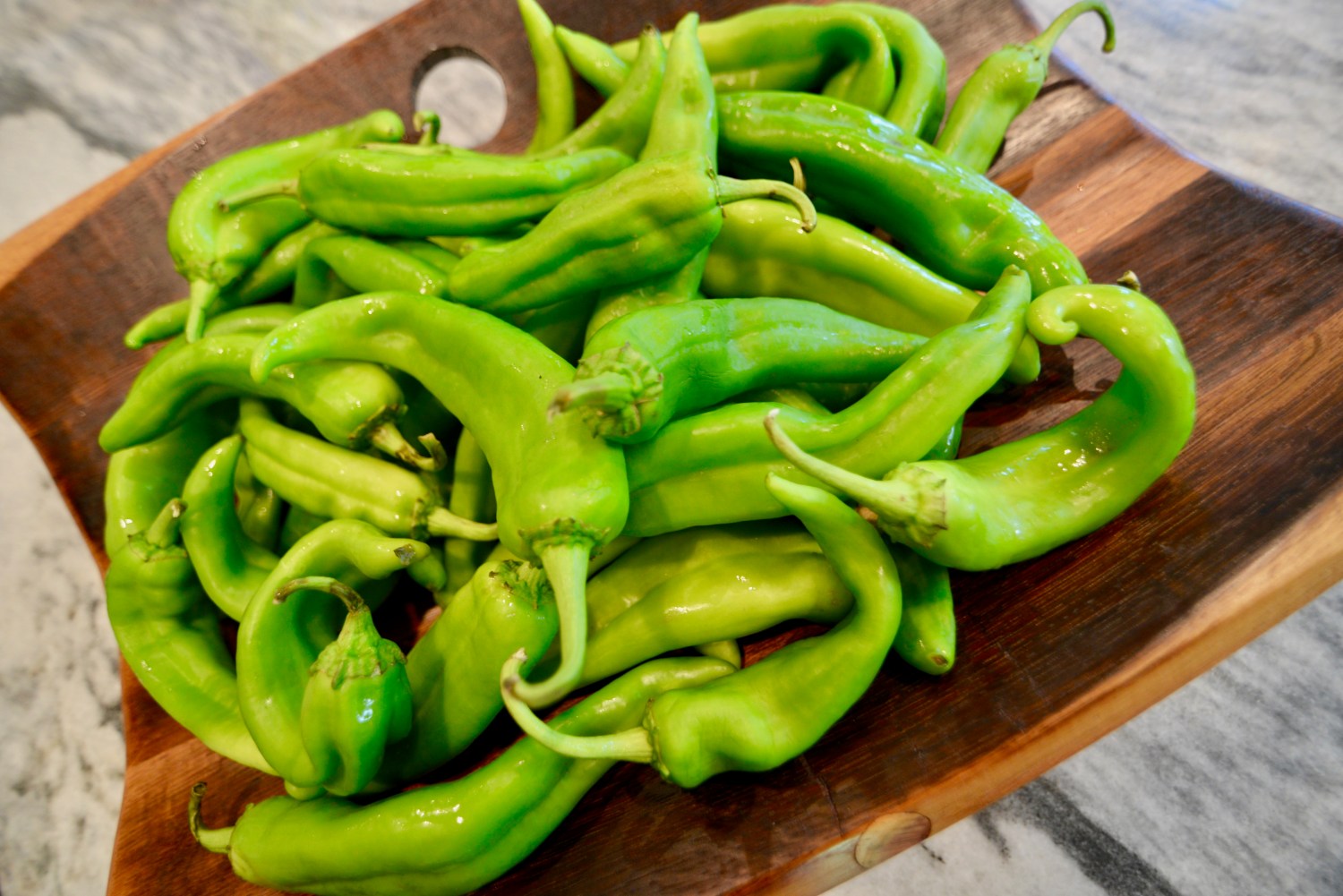
I’m a fanatic – an unabashed Hatch Green Chile evangelist – as you regulars at AMCC most likely know by now. I didn’t just catch the chile fever that has swept the country in recent years, I was born into it and am convinced it was a key component in my baby food. All joking aside, I did actually use hatch green chiles in some of my son’s baby food recipes – verdict, a huge hit! So enamored with these green, roasted pods of heaven am I, that I lugged the allowed amount of roasted hatch green chiles across the Canadian border each year when we lived in Alberta. I spread the gift of the green far and wide in the great white north and our homemade salsa became a de rigueur Christmas gift for our beloved Canadians.

These days, many high-end grocery stores around the country feature Hatch Green Chile roasting events when they’re in season – thank goodness! But back when I was a kid living in West Texas, it was a little-known regional secret. The Hatch Valley in New Mexico was a mere 5 hours from where I grew up. Our grocery stores would have rotating, perforated steel drums out front where they would roast the chiles over an open flame as Whole Foods, Wegmans and Central Market do now. We would wait with unrestrained joy for around the first of August to roll around, which usually heralds the beginning of Hatch Green Chile season. We’d eat hatch green chile-infused dishes for days and would bag up the remaining pounds to freeze for the year ahead.

DSC_9266

A year in Santa Fe only strengthened my life-long soul tie to this magical ingredient. Armed with the Tex-Mex of my youth, I added the flavors of New Mexican cuisine to my culinary rolodex and have treasured them ever since. These days, I’ll use the inimitable flavor of a Hatch Green just about any time a pepper is called for, regardless of the style of cuisine. It almost always lends an unexpected layer of bliss and complexity.

So what is all the hype about? Well, Hatch Green Chiles, the only chiles legitimately granted the lofty title, are only grown in the Hatch Valley of New Mexico. With just around 10,000 acres harvested annually and a season of a mere two months, these green vixens are in serious demand now that word is officially out. Among the capsicum annuum family, Hatch Green Chiles have varietal variations that range from mild to quite hot. But it’s the sandy loam soil, diurnal shifts (hot days and cool nights) and nurturing waters of the local Rio Grande that make the terroir of the Land of Enchantment’s Hatch Valley simply without equal. The sensory masterpiece of spicy, savory and almost sweet is unlike any other pepper in the world and its legacy is also quite impressive. Accounts differ, but chile peppers were definitely brought in by the Spanish and were cultivated (arguably) as early as the 1580’s. As the Spanish settled in the area, chiles became a major crop. Today, Hatch Green Chiles are grown on some of these original cultivated lands; many farms go back several generations and have a rich history all their own.

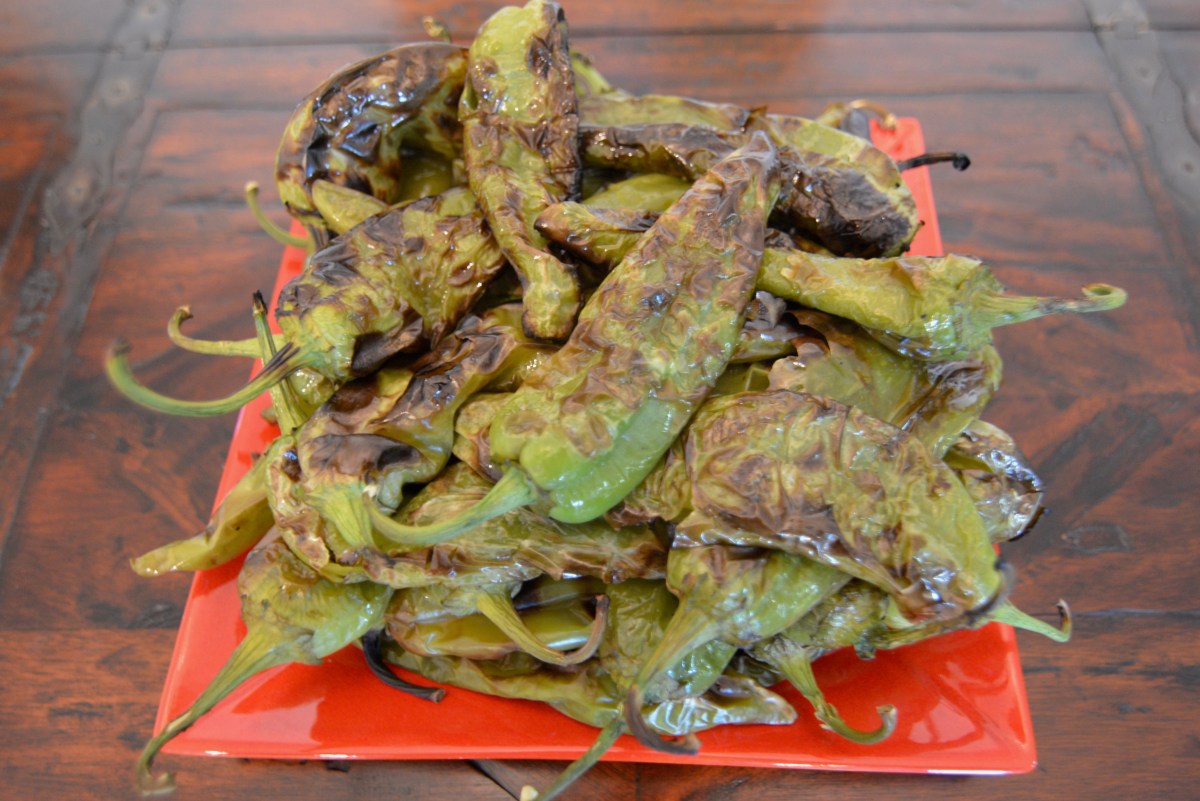
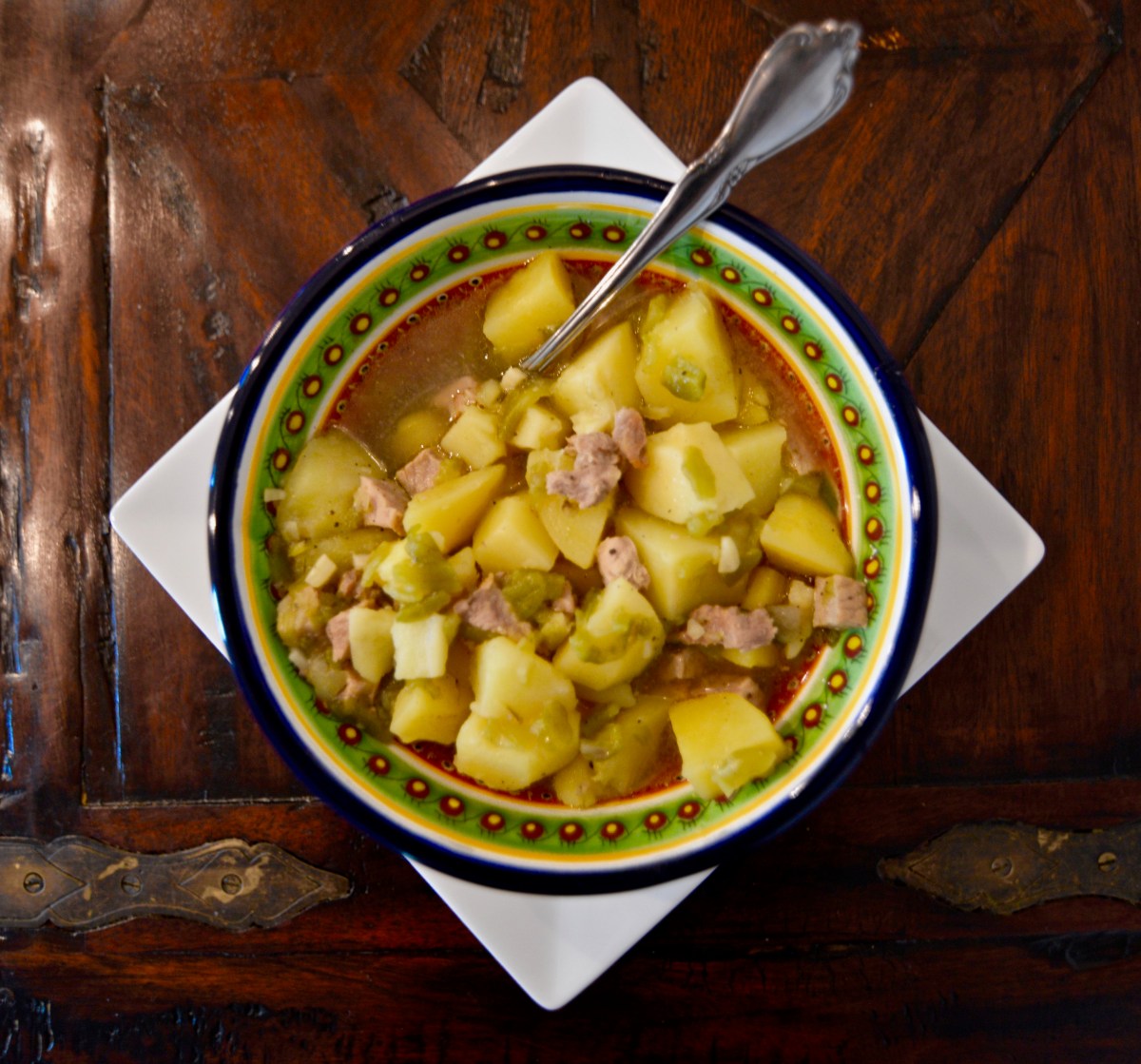
For me, Hatch Green Chiles are more than just a nice ingredient, they are a flavor that lingers in my sense memory and reminds of an aroma and comfort food that knows few equals. I don’t know when I had my first Hatch Green Chile; I just simply cannot remember life without them. This past week, I made my way home from picking Davis up from his grandparents in Texas and, along with all my toddler gear, I toted home 10 pounds of fresh Hatch Chiles for the year ahead. I roasted them at home and we’re currently living off the bounty. Tonight, I’m making Hatch Green Chile Stew, which is a classic and one of my all-time favorites. So, give this heart-warming stew a whirl and stay tuned for more Hatch Green Chile recipes in the weeks ahead.

Hatch Green Chile Stew

I fell in love with this traditional New Mexican dish when I was living in Santa Fe. Over the years, I’ve made it my own as far as measurements, oils, and tiny tweaks are concerned. Nevertheless, I’m a purist when it comes to Hatch Green Chile Stew – you really just can’t improve on perfection, right!

  • 2 pounds of pork (pork shoulder, pork butt or even thick chops will do), dried and dusted with salt and pepper, seared then diced
  • 2 pounds potatoes (I prefer golden, but russets work as well), diced then dusted with salt and pepper
  • 5 roasted hatch green chiles, peeled and chopped (mild to hot is your preference)
  • 2 garlic cloves, minced
  • 1 teaspoon ground cumin
  • 1 teaspoon rubbed sage
  • avocado oil
  • 2 tablespoons butter
  • chicken stock

Dry, salt and pepper your pork; if you’re using a butt or shoulder, chop into quarters. Coat a dutch oven with avocado oil or any other oil with a high smoke point then add ½ teaspoon each of cumin and rubbed sage. Sear the meat on medium-high heat – around 2 minutes per side then set aside. Add 2 tablespoons of butter to the dutch oven, add the potatoes and toss with the remaining ½ teaspoon of cumin and sage. Get a light, even sear on your potatoes then add the remaining ingredients. Cover with chicken stock and bring to a boil. Let the mixture boil for a minute then turn down to medium-low, cover the pot and let it simmer for one hour. Twenty minutes prior to serving, pull off the lid, salt and pepper to taste and allow the liquid to reduce a bit. Ladle into bowls and serve!

DSC_9273

If you’d like to find Hatch Green Chiles in your area, here’s a few links to help you on your way:

https://www.wegmans.com/events/0818/fire—flavor-hatch-chile-peppers.html

https://centralmarket.com/tag/hatch-fest/

https://www.wholefoodsmarket.com/store/event/hatch-chile-fest

If you don’t have a local purveyor, the Hatch Chile Store will ship straight to your door:

https://www.hatch-green-chile.com/?gclid=CjwKCAjwkrrbBRB9EiwAhlN8_O1HsGH8kr9N4WIeMxDoOJ5V1qX1rRwOXQfK1Ge7dBhJVR-Hml_GXBoC5EkQAvD_BwE


  • Libations & Wine

The Inexpensive French Sparkler for your next BBQ

amagnoliasculinarychronicles's avatar amagnoliasculinarychronicles July 6, 2018

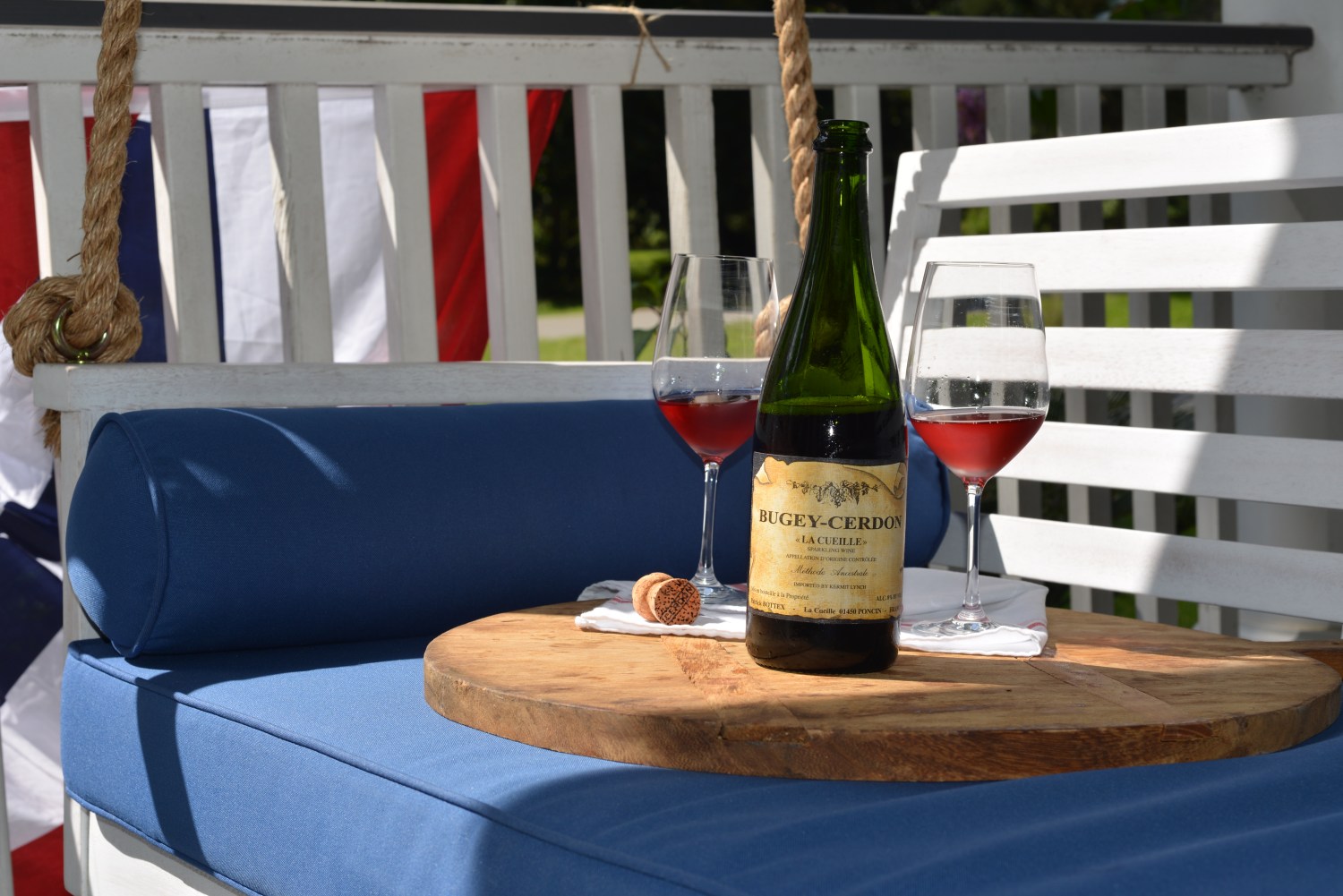
As Independence Day has thrust us all into the full throes of barbeque mania, I’d like to introduce an unusual pairing partner that will launch your next smoked masterpiece to dizzying heights. A delightfully unique red sparkler, Bugey-Cerdon is nestled in France’s alpine wonderland between Savoie, the Jura, Burgundy and Beaujolais.

My first experience with this charming méthode ancestrale red wine is a moment I’ll never forget. I was going through the sommelier program at the International Culinary Center in the Bay Area when I met a couple life-long friends as well as a handful of wines that would change my life. One of our professors and mentors, Alan Murray, (the first Australian Master Sommelier) left me with a lesson that transcends mere wine and resonates as a shining example of what a true sommelier should be – not to mention a wine that’s firmly implanted in my sense memory.

A few years before this time, Alan was serving as wine director for San Francisco’s Masa. He received a call that the legendary chef, Jacques Pépin, (who is also one of our culinary institute’s founders) would be visiting Masa later in the week. Contrary to many of his peers’ instincts when hearing Jacques Pépin would be descending on their restaurant, Alan opted for an inexpensive yet esoteric wine that would strike an emotional chord with his esteemed guest instead of hauling out the most rare and expensive wine in the house. You see, Jacques spent a significant amount of his childhood in the rural, alpine paradise near Bugey-Cerdon. When the night arrived, Jacques swirled his wine then tasted the cheerful nectar and tears welled up in his eyes. His dinner companions sent Alan a thank you note for making the event such a memorable evening. To me, this moment captures the epitome of what a great somm should truly be. He thoughtfully chose to give his famous guest an unforgettable, poignant experience. For a mere $20, Alan over-delivered when many of his colleagues would have dug deep in the cellar for the most expensive, highly allocated and forgettable bottle the restaurant could muster.

With this moving tale marinating in my mind, I took my first whiff then sip of Patrick Bottex’s Bugey-Cerdon. As years have passed, I can undoubtedly say it was more than mere sentiment that made me fall in love at first taste. The glass came alive with notes of firm, ripe berries, a hint of rhubarb, chalk, peony, violet, aromatic alpine air and a subtle yeastiness that was sheer magic! Although the picturesque little hamlet has been crafting wines since the Romans donned togas, it only received an AOC (French Appellation d’Origine Contrôlée) in 2009, but the wines remain the same rural sparklers that the locals know and love. As I previously mentioned, this sparkling wine is crafted méthode ancestrale, which means that the wine starts fermentation in barrel then is racked to bottle before all the sugar has been fermented. Fermentation finishes in the bottle and leaves behind its lees (spent yeast), which results in a magnificently subtle and inimitable flavor profile that only elevates the beauty in the final wine. This unique method is believed to predate the Champagne method – and though I love Champagne, Bugey-Cerdon offers a wholly unique flavor profile that lovers of the bubbly simply must experience!

Imported by Kermit Lynch, which should come as no surprise to those of you who know me, Patrick Bottex’s offering represents the pinnacle of the appellation for the modest price tag of $20-ish a bottle. Patrick and Catherine Bottex farm their high-altitude parcels on limestone slopes perched above the Ain River. The wine is comprised of 90% gamay and 10% poulsard, which is indigenous to the area. The fruit is hand-harvested, fermented with its natural yeasts and delivers a pure, sensory snapshot of the French alps replete with alpine air, limestone minerality and bright mountain fruit in the glass. A perfect, albeit unusual accompaniment to all the sauce-laden barbeque you can throw its way, I’d make sure to have plenty on hand this summer as this thirst-quenching stunner will disappear before you can throw another rack of ribs on the grill.


  • Food

Chanterelles are here! Chanterelles are here!

amagnoliasculinarychronicles's avatar amagnoliasculinarychronicles June 10, 2018

There are few seasonal arrivals that force me into a spontaneous happy dance in public – fresh figs, southern peaches and CHANTERELLE MUSHROOMS! A prized fungi on par with truffles, chanterelles have been thought impossible to cultivate, only increasing their desirability among fungi lovers the world over. However, a recent development in Oregon seems to be baring fruit – or fungi. A fruity yet earthy, nutty flavor with a healthy dose of heaven, these mushrooms fill my sense memory like a bucket-list bottle of wine. If you’ve never experienced them, find some immediately!

Today, at my local Port Royal Farmer’s Market, I happened upon 2018’s first batch of chanterelles in the lowcountry! After doing a brief and joyous jig, which I immediately regretted, I loaded up my shopping tote. Luckily, the licensed forager and farmer from 3 Sisters Organic Farm in Bluffton, South Carolina spoke my language. Equally delighted with chanterelle season, she helpfully explained the licensing process for mushroom foraging in the lowcountry. The long and the short of it is: I am now hoping to get licensed in August. Visions of Peter Mayle scouring the hillsides with a legendary truffle hunter filled my head and made my mouth water. I’ve wanted to learn the art of mushroom foraging for as long as I can remember and now this may just prove to be a reality. So stay tuned for that.

For now, I’m going to enjoy my golden beauties with a fresh pasta (also from my local farmer’s market – Rio Bertolini’s) and wash it all down with a nice, vintage bottle of white Burgundy.

Ingredients:

  • 6oz fresh chanterelle mushrooms, brushed clean and chopped
  • 4 Tb unsalted butter
  • 1 Tb fresh sage, chopped
  • fresh pasta (I used black pepper fettucini)
  • 4 boneless chicken thighs
  • 2 Tb white wine
  • zest of ¼ lemon
  • sea salt and pepper to taste

First, I added one melted tablespoon of butter, ½ a tablespoon of fresh chopped sage and a sprinkle of lemon zest to a ziploc bag. I salted and peppered my chicken thighs then tossed them in for an hour to marinate. I grilled the chicken about a half hour ahead of time then sliced it thin. I will say, however, that bacon works equally well for this recipe and a bit of the leftover grease is lovely with the butter for cooking your chanterelles. Your choice!

Next, I took a small, damp brush and cleaned the chanterelles. I feel like washing them under water seriously takes away from the divine texture – so I recommend gentle brush cleaning instead. When cooking mushrooms, I ALWAYS take Julia Child’s advice to heart. Your mushrooms should be dry before cooking and you never want to crowd the mushrooms; otherwise they will not brown and achieve the perfect texture. So, I cooked the chanterelles in two batches.

DSC_9060

In the meantime, I prepared the pasta – and remember, fresh pasta cooks much faster than dried pasta. Once it was ready, I drained in a colander, but kept 2 tablespoons of the cooking liquid back for the mushroom sauce.

So, my mushrooms dry and clean, I chopped them up then lobbed 3 tablespoons of unsalted butter in the pan. Once the butter started to slightly bubble on medium-low heat, I added the mushrooms, sea salt, freshly cracked pepper as well as the remaining lemon zest and sage to the pan. I allowed the mushrooms to sit on the heat without stirring for a good couple of minutes. Then I tossed the mushrooms and once they were just about ready (about 4 minutes total), turned the heat a touch lower and stirred in the white wine, pasta liquid and the first batch of cooked chanterelles. I allowed the sauce to reduce down a touch while plating the pasta and topping with the chicken. At last, I drizzled the mushroom sauce over the dish and voila!

DSC_9072

For wine pairing, I love a good white Burgundy (chardonnay) with a bit of age. Time will lend a slight nuttiness to the wine that really brings out the extraordinary flavors of the chanterelles. Tonight I opted for a 5-year-old Bourgogne Blanc crafted by Henri Boillot. Although a Bourgogne Blanc is as basic as you can get in Burgundy, this particular wine is more than meets the eye, or the label, at a fraction of the price point for its pedigree. Henri Boillot, fifth-generation Burgundian winemaker, is one of the most sought-after names in the region thanks in part to his meticulous, sustainable farming practices as well as his access to world-class parcels of land. Although the wine is bottled as Bourgogne Blanc, and carries with it the reasonable price tag, most of the fruit is sourced from excellent parcels from the lauded villages of Meursault and Puligny-Montrachet; the vines are merely awaiting requisite maturity before their fruit is included in the more expensive, village-level bottlings. In other words, this wine offers serious price-to-quality and is an example well worth seeking out. In any event, you can’t go wrong with a solid white Burgundy when serving this dish.

As always, bon appétit!


  • Libations & Wine

Savennières – a White Wine to Fall in Love With

amagnoliasculinarychronicles's avatar amagnoliasculinarychronicles May 19, 2018


Over the course of one month, we had packed up the house, took leave of our dear friends in Canada and said a painful, last goodbye to JD, our one-of-a-kind Boston Terrier who had been my soul tie through undergrad, graduate school, my career in Los Angeles, my marriage to Andrew and then our move to northeastern Alberta. He’d survived three Canadian winters right along with us and had taught Pux (our younger Boston) everything he needed to know for the journey ahead. The long drive east across Canada then down into the States was bittersweet yet often filled with humor. At the end of a long day’s drive, we would stack our wine collection, along with our luggage, on the hotel trolley and wheel it to our room in a desperate effort towards climate control. We caught more than one gimlet eye from fellow guests and often just smiled in return, knowing full well we looked like a band of ragtag bootleggers. We made it to Virginia just in time to celebrate the 4th of July – appropriate but unintentionally timed. We were still sleeping on an air mattress to the chagrin of Pux, our-entitled-yet-adorable-Boston, when Andrew’s birthday rolled around a couple of weeks later.

I had started working as a vineyard hand and cellar tech (a bucket list job for me) on the outskirts of the northern Shenandoah (Middleburg AVA for wine). From there, I’d quickly found a charming restaurant with an inspired young chef where I booked a table for Andrew’s birthday celebration. We arrived at the historic Ashby Inn, cradled inside rolling foothills that harkened back to memories of rural Bavaria, and took a seat beneath wisteria vines on the flagstone terrace. After three years of Canadian cuisine, nothing sounded better than their salt-brined fried chicken over corn succotash and the arrival of our order did not disappoint. The wine list was even more impressive and I quickly selected a Chenin Blanc from the tiny French appellation of Savennières. Although I’d come to love Savennières’ unique expression of the varietal in my sommelier studies, the marriage of flavors in this meal was a revelation and it remains one of my favorite pairings to this day. In fact, I’ve paired it with Thomas Keller’s brined fried chicken again and again for wine tastings.

You may be thinking Chenin Blanc? Ugh, sweet wine, but no. It’s true that the more commonly known French village for Chenin Blanc is Vouvray where there as well as the new world (California and South Africa) offer examples of the grape that are off-dry, meaning they have residual sugar and are not fermented completely dry. This is not the case in Savennières where climatic conditions allow the wine to be finished bone-dry, without a hint of residual sugar, while still retaining ample acidity and freshness. The result is one of my favorite white wines out there and somewhat of a guarded secret among sommeliers the world over. Savennières’ racy crisp freshness and mineral verve cuts through the heat (and the fried chicken’s fats) like a hot knife through room-temp butter. The expansive mouthfeel delivers a haunting bounty of roasted yellow apple, apricot, preserved lemon peel and quince, wrapped inside a blanket of wet wool, chamomile, honey comb and aged cheese that leaves you pondering the complex genius behind the liquid nectar with each immensely satisfying sip.

Chenin Blanc has been rooted in the picturesque village of Savennières since around the 9th century and is believed to have been popular as far back as the times of Charlemagne. Comprised of three rolling hills of schist, which gives the wine its unique mineral fingerprint, Savennières is a prime example of the power of terroir, capturing a sense of place that is totally inimitable. If you have yet to fall in love with the Chenin Blanc varietal, this small appellation will redefine your impressions of the grape forever after. Although not all wines are created equal – here are a few of my favorite producers to look for in your quest.

Clos de la Coulée de Serrant

Justly revered as one of the greatest white wines in the world, this single estate is one of only three in France to have their own AOC (Appellation d’origine contrôlées), which is quite an honor. The vineyard was first cultivated in 1130 by Cistercian monks and the site continues to live up to its legacy. Today, the old vines are lovingly tended by Nicholas Joly and his daughter. The estate has been farmed biodynamically since 1984 and has been a beacon of the farming practice within France’s winemaking community for decades. Few names conjure this level of well-earned esteem; the pedigree and sheer magic in the bottle is entirely worth the lofty price tag.

With the king of Savennières behind us, we move on to other outstanding producers. While Joly’s wines do require you to open your wallet as wide as it goes, wines of Savennières actually offer a shocking price-to-quality for the most part. Because they are lesser known in the mass US market, many of the greatest examples of Savennières can be fetched without sticker shock. So here are a few:

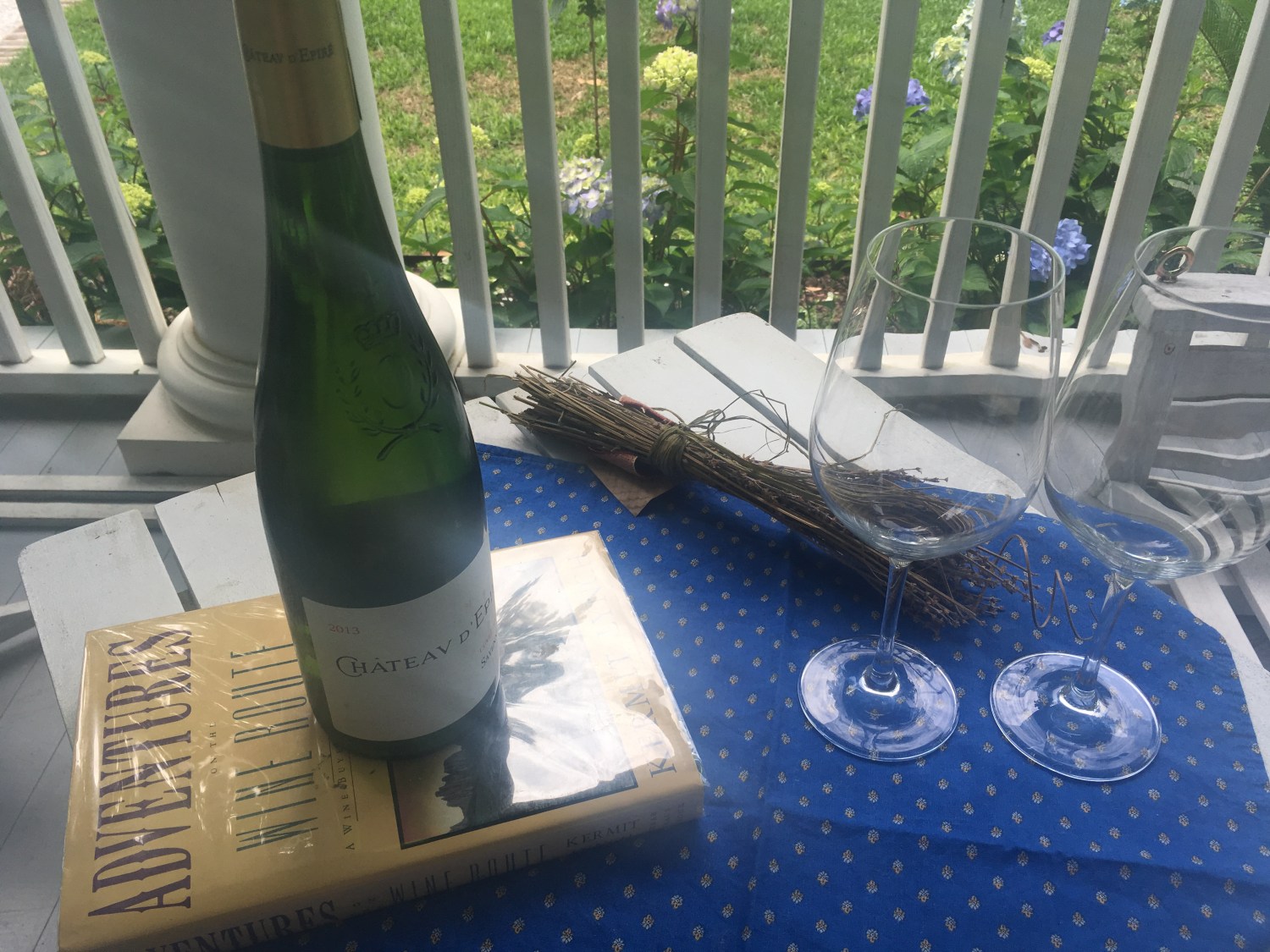
Château d’Epiré ($23+)

This wine is a bit of a staple here in our house. Imported by one of my wine heroes, Kermit Lynch, Château d’Epiré is one of the oldest domaines in Savennières and it’s been in the Bizard family since the 17th century! Part of their beautiful estate also borders the aforementioned, famed Coulée de Serrant and their vineyards are farmed lutte raisonnée, which means they are treated organically unless an extreme emergency arises. In other words, you’re getting some serious varietal purity as well as reflection of terroir here. For under $25, this world-class wine is a steal, which is why the Greers keep it stocked.  https://shop.kermitlynch.com/product/detail/16FBI01.html

Domaine du Closel ($32+)

What do I love about Domaine du Closel? On top of the magnificent wine, the domaine is the product of some pretty incredible women. Matriarch, Michèle de Jessey not only led the family estate for years, she was the first female to ever take the helm of an AOC (French appellation). Today, her daughter, Evelyne, is at the helm where she has been responsible for the organic and biodynamic conversion in the vineyards, which translates to an almost religious purity in the glass that exemplifies everything we love about Savennières.

Domaine de la Bergerie ($30)

Domaine de la Bergerie is a family operation that organically (seeking certification) farms their parcels a mere stone’s throw away from Nicholas Joly’s legendary La Coulée de Serrant. Their mature vines are grown in sandy schist and volcanic soil, which gives the wine an inimitable mineral fingerprint that speaks of the power of Savennières terroir.

Other producers to keep an eye out for are Thibaud Boudignon, Eric Morgat and Patrick Baudoin.

For a pairing you’ll never forget, give Thomas Keller’s fried chicken from his book Ad Hoc a whirl. As my Dad likes to say, “it’s so good, it’ll make you take back shit you didn’t steal!”

A votre santé!
  • Libations & Wine

This Mint Julep makes a Run for the Roses

amagnoliasculinarychronicles's avatar amagnoliasculinarychronicles May 5, 2018

The Kentucky Derby hits the track tomorrow, which ushers in a welcomed excuse to consume copious amounts of Bourbon in the middle of the day without judgment. Our house is hosting a Derby party where Mint Juleps are mandatory and hats will be optional. For the perfect Mint Julep, my Bourbon of choice is Four Roses (aptly named, I might add); while you can spring for the small batch or single barrel, which are lovely, their regular label Bourbon is fantastic for our purposes here. The flawless marriage of honeyed oak and hint of smokiness strikes the ideal chord without overbearing the freshness of the mint. As for mint, spearmint is key.  Infused in simple syrup then poured over crushed ice – the ice must be crushed – it just tastes of springtime. I like to save a decent amount of fresh spearmint to garnish as well. The recipe is simple and the result will have you off to the races in no time.

IMG_6434 (1)

I’m making a huge batch, so feel free to dial it down by half or more if need be. Just keep in mind that the simple syrup is equal parts water and sugar.

Ingredients:

  • 1 bottle of Four Roses Bourbon
  • 4 cups water
  • 4 cups sugar
  • 1 bunch of fresh spearmint
  • crushed ice

I’d just like to offer a little hack for those of you who plan to crush your own bags of ice in Ziploc bags as I’ve done in the past. Go to Sonic instead! They sell their perfectly crushed ice for $2.50 a bag. As your hammered ice slips through the thin plastic of your Ziploc and drains all over your countertop, you’ll be wishing you took my advice on this one…I’m speaking from experience here.

At least an hour ahead of serving, you want to make your simple syrup and infuse it with the mint. Keep a few sprigs of mint aside for garnish. Pour the sugar, water and mint into a pot and bring to a boil. Let the mixture cool then stick it in the fridge. Just before serving, strain the concoction through a sieve or even a coffee filter.

Mound the crushed ice into glasses and pour 2 ounces of Bourbon and 1 ounce of the mint simple syrup over the ice. Garnish with mint and serve. And don’t rush. Think southern – the slow country – the longer the drink marinates in the melted ice, the dreamier the libation becomes.  Oh and a special thanks goes out to my hubby who snagged me these antique mint julep cups for Christmas this year – love you!

DSC_8986

Ladies and gentlemen, place your bets.  Happy Derby Day, y’all!


  • Food

Classic Chile Rellenos from Banderas Bay

amagnoliasculinarychronicles's avatar amagnoliasculinarychronicles April 26, 2018

Today’s recipe comes out of a cookbook I have been putting together for my parents. Something of a labor of love, A Taste of Banderas Bay brings together the flavors of the culinary haven that’s been etched in our family’s sense memory over the last couple decades. My parents have been vacationing in the Bay of Banderas for years, but a few years back they decided to find a place to call home in their favorite pocket of the world. Now they own a charmed spot in the village of Punta de Burra just half an hour up the coast from Puerto Vallarta.

DSC_8187

Anytime I visit my family in Mexico, I always find myself in the kitchen, learning beside the expert hands of a generous and talented chef. Many recipes have been culled from Lupe at Villa Estrella Mar, and more recently from Elena, whose autodidactic genius is both inspired and captures the warmth of unparalleled Mexican hospitality.

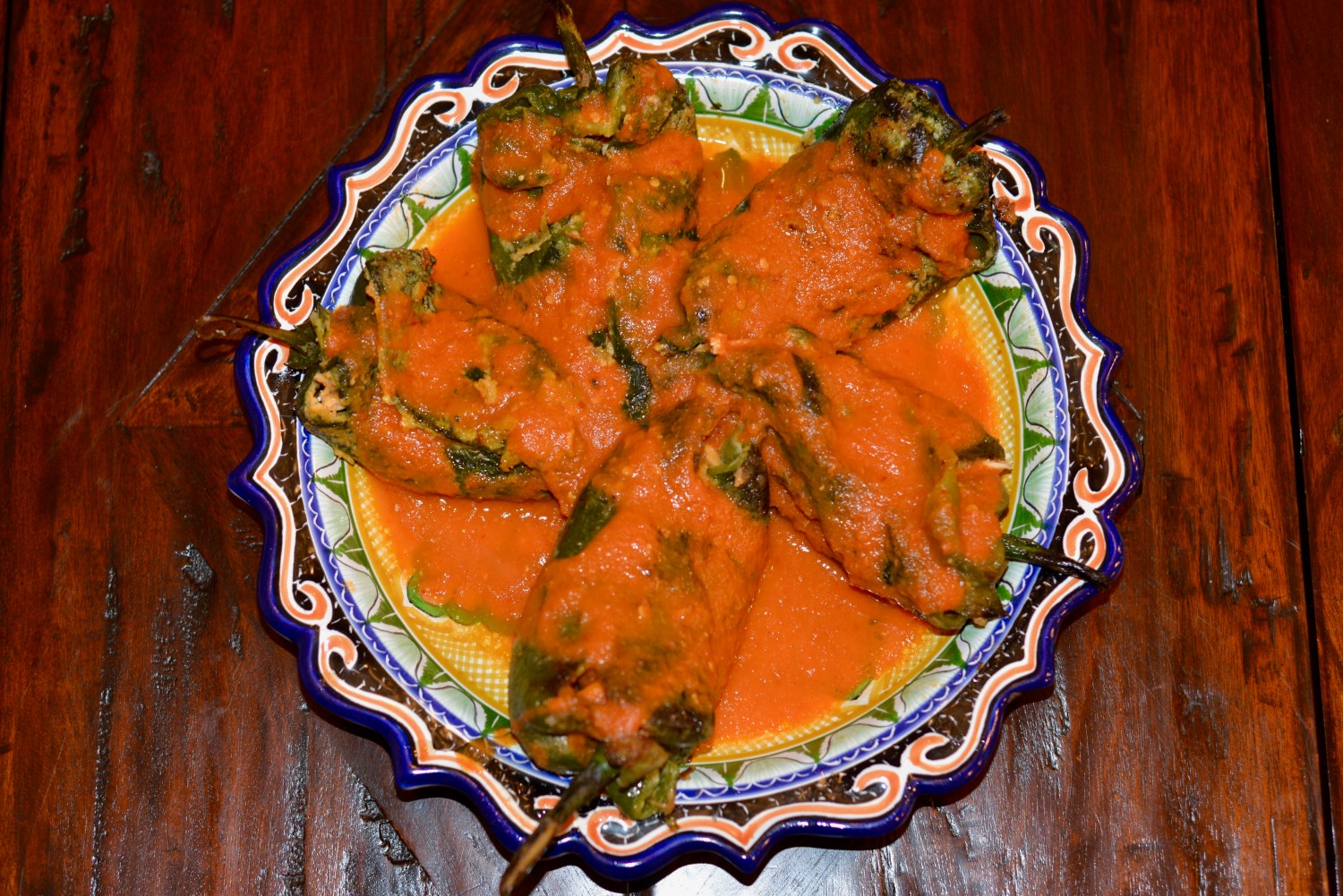
Chile Rellenos are a recognizable favorite here in the States, but today’s recipe boasts authenticity and details that offer something new and revelatory in their efficiency and simplicity. Although Elena traditionally stuffs her chiles with cheese, I often opt to fill them with her divine poached chicken recipe when serving this dish as an entrée. You may have your own chile rellenos recipe, but I guarantee this authentic guide is a take on the classic that’s well worth a spot in your rotation.

If you’re looking for a wine pairing, I whole-heartedly recommend a French Cabernet Franc from the village of Chinon. This red beauty has the savory gusto to greet this chile-laden dish with utter perfection.

So, without further adieu…Elena’s Chile Rellenos.

Serves three. Feel free to double the recipe for six – these are great as leftovers.

Chicken Filing:

  • 2 chicken breasts
  • 1 teaspoon salt
  • 1 teaspoon cumin
  • 1 teaspoon sage
  • 3/4 of a shallot, use 1/4 remaining shallot for the sauce
  • 1 garlic clove, smashed and peeled

I like to prep my chicken ahead of everything for ideal timing. Place chicken, along with the remaining ingredients, in a stock pot then just cover the chicken with water. Bring to a boil then cover and simmer on medium-low until the chicken is cooked through. Save the chicken stock for future use and shred the chicken into thin strips.

DSC_8926

The Sauce:

  • 4 tomatoes
  • 4 dried red chiles (hatch red chiles are my favorite, guajillo are also great)
  • 2 garlic cloves, minced
  • 1/4 a shallot, minced
  • 1/2 teaspoon cumin
  • 1/2 teaspoon sage
  • salt and pepper, to taste

Place tomatoes, garlic cloves, shallot, dried red chiles, cumin, sage, salt and pepper in a pot then add 1 cup of water. Bring to a boil then cover and simmer on low for 30 minutes. Keep an eye on the pot. You want to reduce down the water to about half, but you don’t want the liquids to run dry. If need be, add more water as it simmers. Remove from the stovetop and puree in a blender. Pour half this mixture over the shredded chicken and mix until covered evenly. Set the remaining sauce aside to pour over the finished chiles.

The Chiles:

  • 6 poblano chiles
  • 6 eggs
  • oil (Elena uses canola, but I prefer avocado or olive oil)
  • 3 tablespoons of flour (if you’re on keto – almond flour will suffice)

Wash the chiles. Slice them down the middle and carefully remove the seeds but not the stem – you want them to maintain their shape. Dry them then roast under your broiler, on both sides, until the skin begins to blacken. Place the chiles in a plastic bag to sweat for ten minutes. This makes removing the skins so much easier. Thanks, Elena, for such a fantastic hack!

DSC_8937

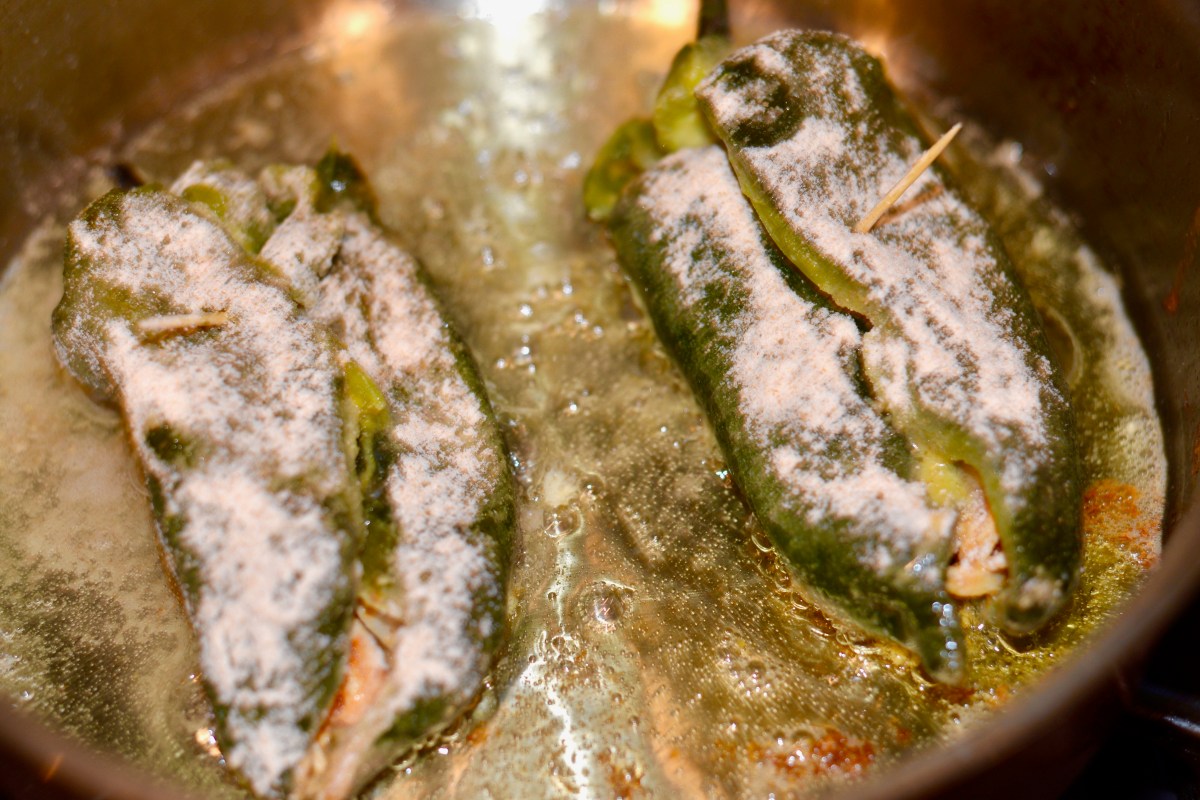
Pour your oil into a frying pan and get it sputtering hot. Fill the chiles with the chicken mixture and close with a toothpick. Beat the eggs and cover the chiles with the batter then dust with flour. Sear the chiles in the hot oil for about 2 minutes a side. Arrange on a plate then drizzle with the remaining sauce and serve.

Buen Provecho!


  • Food

Italian Ragu with a Keto Spin

amagnoliasculinarychronicles's avatar amagnoliasculinarychronicles April 19, 2018

This keto-friendly Tuscan Ragu over Mascarpone “Polenta” will make you forget you’re even on a diet…

Read More "Italian Ragu with a Keto Spin"

  • Food

Mexican-Style Slaw – when a Side Becomes More than an Afterthought

amagnoliasculinarychronicles's avatar amagnoliasculinarychronicles March 23, 2018

Sometimes sides are merely an afterthought…like a mismatched scarf thrown on last minute when you realize it’s windy and you’re late getting your toddler off to school. Then there are times when that Hermes scarf takes your simple black sheath to a whole other level. Not that I’m calling this Mexican-styled slaw Hermes, but you get the gist.

The other day, Andrew came back from Whole Foods with their Habanero and Green Chile Pork Sausage. You probably already know about my endless affinity for green chiles – if not, now you do. Well, there’s countless things I could have done with these yummy tubes of heaven, but I was craving something clean to offset the hefty weight of the sausage and I decided to craft a slaw to suit. What transpired was a recipe that I will use again and again – on fajitas, with fish tacos, on banana leaf-wrapped sea bass – the list goes on. It’s pure, accidental magic. So…

IMG_6178

Ingredients:

Dressing:

  • 1/8 cup sherry vinegar
  • juice of ½ lemon
  • 1/4 cup extra virgin olive oil (cold pressed)
  • 1/2 Tb honey
  • 1/2 t ground cumin
  • 1/4 t rubbed sage
  • 1/2 t sea salt

Slaw:

  • ½ head of cabbage, in thin 1-inch slices
  • 2 roasted poblano peppers (or hatch green chiles if available), in thin 1-inch slices
  • 1 roasted hot Anaheim pepper, in thin 1-inch slices
  • 1/4 bunch of fresh cilantro, chopped
  • 1 t cumin seed
  • freshly cracked black pepper, to taste

First, roast the peppers under the broiler in the oven on both sides. When the skin is puckered and starting to blacken in spots, pull them out, slide the skin off then chop. Layer the fresh cabbage strips, peppers, cumin seed, black pepper and cilantro then drizzle with dressing. Let this mixture rest for at least half an hour before serving, if possible.

Enjoy!

  • Food

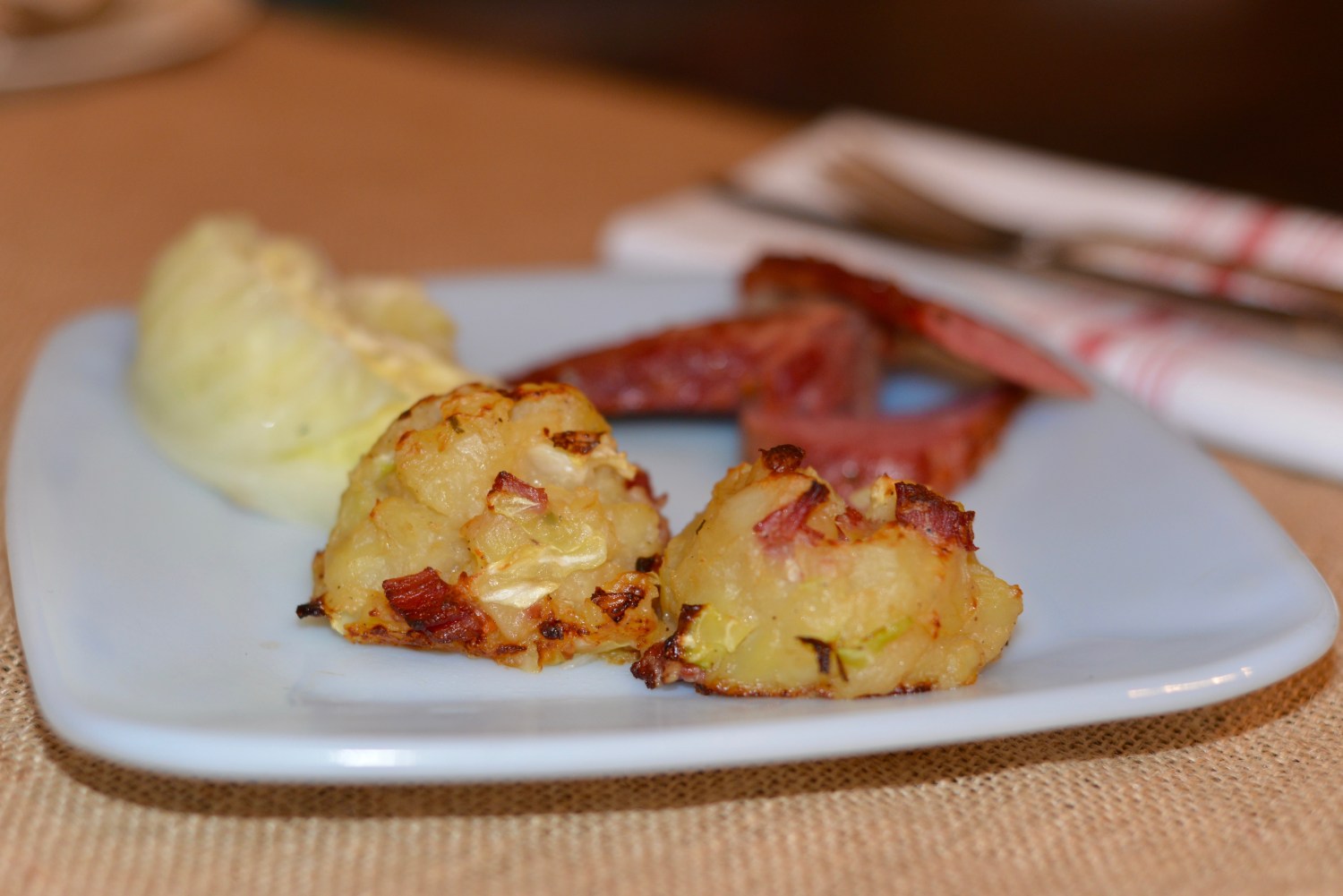
Colcannon – Authentic Irish Fare for your St. Patty’s Day

amagnoliasculinarychronicles's avatar amagnoliasculinarychronicles March 15, 2018

For a truly authentic Irish treat, give colcannon a whirl this St. Patrick’s Day. Sláinte!

Read More "Colcannon – Authentic Irish Fare for your St. Patty’s Day"

Posts pagination

Previous 1 2 3 Next
Blog at WordPress.com.
A Magnolia's Culinary Chronicles
Blog at WordPress.com.
  • Subscribe Subscribed
    • A Magnolia's Culinary Chronicles
    • Join 27 other subscribers
    • Already have a WordPress.com account? Log in now.
    • A Magnolia's Culinary Chronicles
    • Subscribe Subscribed
    • Sign up
    • Log in
    • Report this content
    • View site in Reader
    • Manage subscriptions
    • Collapse this bar
 

Loading Comments...