Skip to content
  • Home
  • About
  • Facebook
  • LinkedIn
  • Twitter
  • Instagram
  • Food
  • Libations & Wine
  • Uncategorized
  • Travel
  • Facebook
  • LinkedIn
  • Twitter
  • Instagram

A Magnolia's Culinary Chronicles

Not all those who wander are lost – J.R.R. Tolkien

  • Home
  • About
  • Libations & Wine

A Red Wine that Charms…and other Musings

amagnoliasculinarychronicles's avatar amagnoliasculinarychronicles March 5, 2018

Tucked inside an enchanting wine bar on Charleston’s King Street a couple weekends ago, my husband and I shifted into a lower gear to celebrate our anniversary. My Mom (bless her heart!) stayed back in Beaufort with our son while we packed a bag and hit Highway 17 for a quick getaway to the Holy City. Once a sanctuary of religious tolerance in a period when the Church of England was practically de rigeuer, Charleston earned its moniker for the relative variety of churches that sprouted along Meeting Street. The pint-sized yet picturesque city was also a wet hot center of boozy freedom when the southeast was parched dry, which stands to reason why Charleston is arguably the greatest city in South Carolina for wine – and good wine at that.

DSC_8879

In any case, my man and I had just sat down in our favorite wine haunt, Bin 152, eponymously named for its address on 152 King Street, when I remembered why I loved this joint so much in the first place. Littered with bucket list wines available through Coravin, the menu boasted producers I simply never encounter in South Carolina. Among greats, imported by New York houses, were also myriad offerings from Berkeley-based importer Kermit Lynch. Now, I don’t intend this to be a post only drummed up for the sake of wine geeks, but Kermit Lynch is a name every wine drinker should come to know and inevitably love. So, before I wax on about the nirvana that was reached in a single bottle of wine, let me first tell you a bit about Kermit.

With a $5,000 loan and a blazing passion for old world wine, Kermit Lynch substantially aided and changed the American wine market forever back in 1972. He sought out French artisanal producers who were crafting wine the way their ancestors had – without manipulation – the way nature intended. These wines had – and still have – that gout de terroir (taste of the soil), that inimitable quality that delivers sense of place and purity of fruit all in one sniff or sip. The wines he introduced to the American lexicon were unlike anything we had yet to experience on our shores. No one was bringing these home-grown, family wines to the States. Although there are numerous importers that now feature small, traditional producers, Kermit Lynch was and remains a trailblazer here in America. He’s won multiple James Beard awards along with France’s Legion d’Honneur, but all you really need to remember is this: when you see, “imported by Kermit Lynch,” on a label, buy that wine.

As I perused Bin 152’s list, I came across name after name that made my heart flutter; it was hard to narrow it down, then at last I came to Jean-Paul Thévenet and I knew I had the winner. A red beauty so full of rustic purity, easy charm and inimitable minerality, this complex yet delightful vixen from Morgon made me remember how I had fallen in love with the Gamay varietal in the first place.

When many people hear the name Gamay or Beaujolais, they usually think of Beaujolais Nouveau – an insipid youngster that reeks of bubblegum (truly) and lack of depth. This was always my take on Beaujolais until I experienced the transcendent magic of a fine Beaujolais Cru. It changed my life. Beaujolais Crus are represented by ten villages in the appellation, which are south of and technically part of the greater region of Burgundy, but their grape is Gamay, not Pinot Noir. And although I love a great Burgundian Pinot Noir more than just about anything on earth, it comes with a serious price tag, whereas fine Beaujolais Cru – even from producers at the apex of the appellation – is shockingly affordable. In fact, I’m not exaggerating when I say that Beaujolais Cru offers among the greatest price-to-quality in the world of red wine – though not all producers are created equal. When seeking out a Beaujolais Cru, look for Morgon or Fleurie (my favorite villages); if Kermit Lynch is an option as the importer, go for it; and keep an eye out for the names Jean-Paul Thévenet, Guy Breton, Jean Folliard and Marcell Lapierre as well as Jean-Paul Brun and Julien Sunier.

A little history here, Thévenet, Breton, Folliard and Lapierre were lovingly dubbed, “the gang of four,” back when they forged an ambitious movement to turn back the hands of time and started crafting natural wine that bucked the local trend of over-cropped, manipulated, carbonic macerated Beaujolais Nouveau – aka plonk. They farmed biodynamically and organically, eschewing chemicals, in favor of letting nature take its course. They opted for indigenous yeast for fermentation and aged their wines in large, neutral Slovenian oak foudres or cement, which allowed the true nature and minerality of the wines to speak for themselves. Fast forward a handful of decades and many youngsters are following in their footsteps – the result: the world is once again beginning to take notice of Beaujolais. Luckily, the prices are still ridiculously reasonable and the quality has never been higher.

Thevenet_Morgon_12_web

The sweet nectar of the Gods I quaffed back in Bin 152 was a Beaujolais Cru from Morgon, crafted by Jean-Paul Thévenet. One of the original gang of four, third-generation Jean-Paul has been sharing his wealth of knowledge with his son, Charly. His small five-hectare domaine boasts vines that are between 45 and 110 years old! He keeps his yields low, farms biodynamically, harvests and sorts by hand then ferments with indigenous yeasts his whole clusters – low and slow – in cement. After which the wine is aged on its lees (spent yeasts) in 5-7 year old Burgundian oak, which leaves the wine unmasked by a heavy-handed oak signature. The wine is bottled without fining or filtration, which allows every nuance of terroir as well as varietal purity to speak.

Jean-Paul Thévenet only makes 2,000 cases a year – seeking quality over quantity. So to find this rare gem in our little haunt in Charleston, South Carolina made it all the more enjoyable. Every sip ushered in a wave of appreciation for the man that made the wine, the importer who had the guts to gamble on an unknown and all the trailblazers out there who seek out something pure instead of the sole quest for the almighty dollar. What we experienced was pure beauty and in that moment, away from home and responsibility, my husband and I remembered not only that we loved one another, but that we really still dig each other. To my husband, to Kermit, to Beaujolais Cru, to Charleston and to you for reading – Cheers!


Tasting Notes: The tantalizingly pure and perfumed nose charms with aromas of freshly picked wild strawberry, red cherry, pomegranate and raspberry laced with dew-kissed peonies, violets and black tea. The refreshing and vivid wine expands on the palate to deliver even more complex notes of orange zest, cranberry, a hint of grape seed, a touch of tree bark, subtle licorice, white pepper, herbs de Provence and unmistakable granitic minerality that lingers on the palate like a haunting tune that echoes in the mind. Although its energy and depth are there in spades, this wine isn’t heavy handed – it’s refreshing, delightful and has the uncanny ability to disappear before your very eyes.

For your perusal:

https://www.kermitlynch.com

https://www.bin152.com


  • Food

A Love Letter to Winter Vegetables

amagnoliasculinarychronicles's avatar amagnoliasculinarychronicles February 10, 2018

Seasonal eating has been chic for a while now and the glorious farm-to-fork movement across the United States has only reinforced the old-made-new trend all the more en vogue. Years back, when I was living in Los Angeles, the craze was already deeply embedded in the haute cuisine of the state – thanks in no small part to retro pioneers like Alice Waters and her NorCal set. I thought I had an appreciation for such things when I lived there. But let’s be honest, living in a city where the perfect specimen of food from around the globe was available practically 365 days a year and nearly any hour of the day made eating seasonally more of a whim than a way of life. And although I reveled in the state’s bounty of fresh produce and the availability of any type of organic produce imaginable, a sense of place never materialized in the cuisine the way it has in the small towns I’ve lived in across the US and Canada. Los Angeles is truly akin to Hemingway’s Moveable Feast – I changed cuisine there like my undergarments.

All that changed when I moved to Cold Lake, Alberta. Practically at the end of the road north, produce was shipped up to us at such a distance that it was mealy, near tasteless and only faintly resemblant of the original majesty of its virtue and freshness. Eating seasonally became paramount to anyone with even a hint of a palate. What sounds like a desperate desert of a culinary environment, and it was for the first year, turned into something of a blessing. I began to look forward to the onset of each season and the harvest of a particular fruit or vegetable. I began to live by the seasons with almost religious fervor. And in doing so, I experienced a gastronomic explosion that I never could have imagined and a greater appreciation for the joy of each changing season.

While the winters were LONG, I came to relish the pop of the jar I had canned…the joy of a hearty stew that warmed the bones and a love for the rewards of hunting season.

DSC_8848

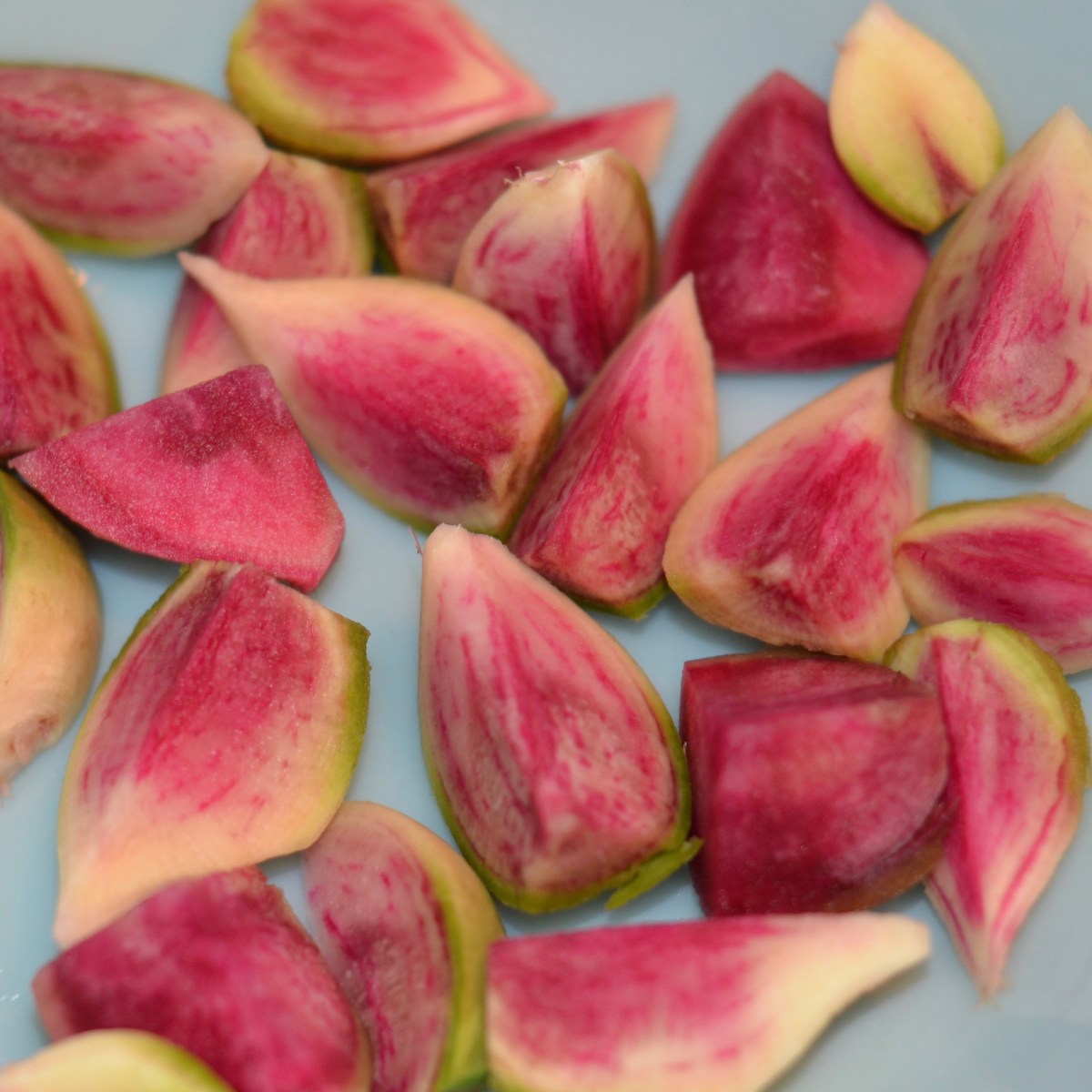
So here we are in the midst of a Lowcountry winter. The fruit is desperately sad for someone who shares my irreconcilable disdain for apples. Nevertheless, the vegetables of winter are some of my favorites. Watermelon radishes! Rainbow carrots! Crisp, bright fennel! What a bounty! Our Port Royal Farmers Market is open year round and is such a treasure! There are several vendors who I love – particularly the mushroom man who delivers premium chanterelles for $6 a pint during their season! But this Saturday I stopped by Adam’s Farm tent where I can always find local produce at its most fresh and pure. Dedicated to sustainable and environmentally friendly farming practices, their produce is as beautiful as it is delicious. On this particular trip, I snagged some watermelon radishes, golden and candy cane beets as well as kale. I had an idea for lunch in mind and the results were even more sensational than the sensory expectations I had conjured up in my head. I grabbed some bacon from a local rancher and cruised home to the sounds of Bowie’s Suffragette City with a giddy grin on my face.


DSC_8845
DSC_8841
DSC_8840

I threw on a record, poured a cup of coffee and set to work on a warm winter vegetable salad that would knock my family’s socks off. Even my two year old, who normally turns up his nose at salad, gobbled this bowl of beauty up in record time.

Warm Winter Vegetable Salad

Ingredients:

  • 1 pint of watermelon radishes
  • 1 pint of assorted beets (golden and candy cane – although red will do the trick)
  • 1 bunch of kale
  • 1 clementine, zest and juiced
  • 2 teaspoons dried lavender
  • 1 teaspoon cornflower
  • 6 strips bacon, cut in lardons
  • 1 ½ teaspoon salt salt (I used fleur de sel)
  • freshly cracked pepper to taste
  • olive oil

DSC_8851

First, clean and scrub your beets and radishes then quarter them with the skins on. Line two ovenware dishes (I use old school corning ware with lids) with foil and drizzle olive oil in the bottom. Place the beets in one dish and the radishes in the other. Grind ½ teaspoon of lavender, sprinkle ½ a teaspoon of salt and 1/3 of your Clementine zest over each dish then drizzle with olive oil. Cover the radishes and beets with foil and then place the lid on top. Cook in the oven at 425 until a fork glides – the radishes will be ready a good 20+ minutes before the beets. Take the radishes out when they’re cooked. Then, when the beets are ready, uncover both of the dishes and broil on high for 3 minutes.

DSC_8865

In the meantime, cook the bacon lardons (¼ inch x 1 inch) in a skillet then set aside on a paper towel. While the beets and radishes are broiling, quickly sautee the kale in a tablespoon of olive oil. Sprinkle a teaspoon of lavender, ½ teaspoon of sea salt and the remaining clementine zest over your kale. This should only cook for about two minutes. The last 30 seconds, drizzle the juice from the clementine over the kale and toss. Arrange the kale in salad bowls, top with beets, radishes and bacon then garnish with the cornflower and serve.

DSC_8868

If you’re looking for a wine to uplift this savory lunch, opt for an Austrian Grüner Veltliner. The bright crisp notes of fresh herbs and radishes in this refreshing yet complex white wine will bring this dish to a whole other level! If you’re unfamiliar with Grüner Veltliner, it’s a varietal you really should seek out. It has an inimitable flavor profile but will suit your craving for a crisp Sauvignon Blanc with effortless ease. It’s also one of the best white wines in the world in terms of price-to-quality. If you have options when you’re out shopping, look for “Kamptal,” “Kremstal,” or “Wachau,” on the label – nestled along the great Danube River on dizzingly steep slopes, these three are the greatest villages in Austria for the varietal.

And as always – bon appétit!

  • Travel

Provençal charm on Mexico’s Bay of Banderas

amagnoliasculinarychronicles's avatar amagnoliasculinarychronicles January 24, 2018

Gazing up the steep hills along Highway 200, about 45 minutes northwest of Puerto Vallarta, the picturesque, tile-roofed villas and undulating terrain is enough to convince the stoutest Francophile they’re cruising along France’s Cote d’Azur. A charming pocket of Jalisco, Mexico, this stretch of Banderas Bay, is a hidden gem that’s yet to be overdeveloped. The gifted local artisans and serious gastronomes offer a slice of Mexico that is simply unparalleled in the larger, resort-filled cities.

DSC_8342.jpg

My folks have a house in the small community of Punta de Burro where we revel in the chance to unwind and bask in the warm, moderate climate during the winter months. Although we spend ample time lounging on the beach and playing in the surf, a highlight of every getaway is inevitably the Sunday Market in La Cruz de Huanacaxtle. An overabundance of bespoke goods, farm-to-table food and fresh produce, this market rivals even the most lauded markets of Provence. Vendors from all over western Mexico vie for a spot to showcase their wares. The organizers maintain meticulous standards and only allow vendors that offer original, hand-crafted products – no reselling allowed. Fashion designers feature their own creations, weavers bring blankets they’ve dyed and woven personally, coffee roasters bring their sustainably-farmed beans down from the mountains and the food stands send your olfactory senses into a state of sheer nirvana.


DSC_8273
DSC_8314
DSC_8318
DSC_8330

The venue is no less impressive with a location along the La Cruz Marina that now includes the local fish market where the freshest fish on Banderas Bay is sold to locals as well as restaurants. But my favorite aspect of the market has to be the vendors. A varied array of talents, the people behind these products are true artisans and are more than happy to chat about their craft or share anything that strikes you about this special corner of Mexico.

DSC_8290

Just a few of my favorite vedors:

Siruela es Ropa de Autor

Siruela’s hand-crafted garments are so light and whimsical, you’ll feel like you’re floating inside of them. Organic materials, crafted in Mexico, in their small, quaint workshop, these dresses feel like a modern-day cross between Stevie Knicks and Zelda Fitzgerald. The designer, a pint-sized Mexican beauty, is as enchanting as her dresses and is a genuine auteur – or autor. http://instagram.com/siruelaropadeautor


El Fortin de San Sebastian Coffee

Sustainably farmed in the mountains around the town of San Sebastian, El Fortin’s beans are roasted in-house and deliver a pure, aromatic delight that rivals personal favorites like Intelligensia and Savannah’s Perk. If you miss the Sunday Market, they also have a café in Sayulita that is well worth seeking out.


Sana Spice

Ukranian-born, Oksana Oliinyk, aka – the spice connoisseur, offers an array of beautifully packaged spices that will send any gourmand’s heart aflutter. While she offers guajillo chiles, epazote and a host of locally grown, organic herbs and spices, Oksana’s thoughtful selection also includes high-end offerings from around the world including exotic sea salts, coneflower, Iranian Saffron and Ukrainian chives – just to name a handful. Her breadth of wisdom is not limited merely to the culinary arts but includes a near-encyclopedic knowledge of medicinal properties of each herb and spice as well.

https://www.instagram.com/oksana_max/


  • Food

A Bowl of Warmth with a Thai Twist

amagnoliasculinarychronicles's avatar amagnoliasculinarychronicles January 13, 2018

Nothing quite satisfies like a steaming bowl of soup when it’s cold out. As much as I love a good stew, I’ve been craving something not only warm and soothing, but cleansing and restorative after the culinary sins of the holidays. As I perused my olfactory rolodex, I came across a concoction that I turned to time and again during our years in Cold Lake, Alberta – a Thai-inspired coconut soup.

One blessing in disguise during our northern exposure was a total lack of Thai food within about a 4-hour radius. Andrew and I both look to Thai cuisine as comfort food, especially when it’s chilly. So, due to sheer lack of availability, I forced myself to learn the fundamentals of Thai cooking at home. I stocked up on supplies during a trip to Edmonton (also four hours away) and set my hand to learning some of our favorite dishes. Over time, I tweaked Tom Kha Gai into something of my own and the result is this recipe, which has become a winter favorite in our house.

What I really love about this dish is the therapeutic quality gleaned from some of the ingredients. Ginger is not only beneficial to the tummy, it’s a rockstar at fighting off cold and flu. Cilantro is another delicious ingredient with serious medicinal power. It actually acts as something of a coagulate for toxins and heavy metals and is incredible at flushing them out of the body – talk about a cleanse! Garlic and lemongrass are not only natural antibiotics, they’re also anti-viral and anti-fungal. So whether it’s a healthy alternative to your favorite stew or just speaks to your current cravings, give this soup a whirl.

DSC_8724

Ingredients:

  • 1 chicken breast
  • 2 bone-in thighs
  • 1 jalapeno, halved & sliced (set aside)
  • 1 red chile, halved & sliced (set aside)
  • 4 white mushrooms, thinly sliced (set aside)
  • 8 asparagus spears, ½ inch slice (set aside)
  • 2 green onions, ¼ inch slice
  • 1 carrot, thinly sliced
  • 3 kaffir lime leaves
  • 1 inch ginger, half minced & half thinly sliced
  • 1 teaspoon lemongrass, minced (you can substitute edible lemongrass essential oil)
  • 2 cloves garlic, minced
  • 1 tablespoon coconut oil
  • juice of ½ lime
  • 1 can coconut milk
  • sea salt & white pepper, to taste
  • vermicelli noodles (or substitute zucchini noodles for a grain-free dish)

For garnish:

  • chili garlic paste
  • cilantro, chopped

Although you can use packaged chicken stock for this recipe, I prefer to make a quick, thai-inspired stock. It’s quick, easy and will finish up while you’re chopping. First, cut most of the meat off your bone-in chicken thigh and put it in a pan. Add 12 ounces of water, 1 kaffir lime leave, a few slices of jalapeno, a dash of minced garlic and a couple of ginger slices to the pan. Bring to a boil then immediately turn to medium-low to simmer.

DSC_8714

In the meantime, chop all your veggies and thinly slice the chicken (think Pho for thinness). In a wok (a dutch oven will also do), heat up your coconut oil and add 2 kaffir lime leaves, ginger, garlic, carrots, the whites from your green onions, sea salt, white pepper and lemongrass. Sautee the ingredients for a couple minutes then add coconut milk, chicken and the chicken stock you’ve been simmering. This should simmer for about 4 minutes.

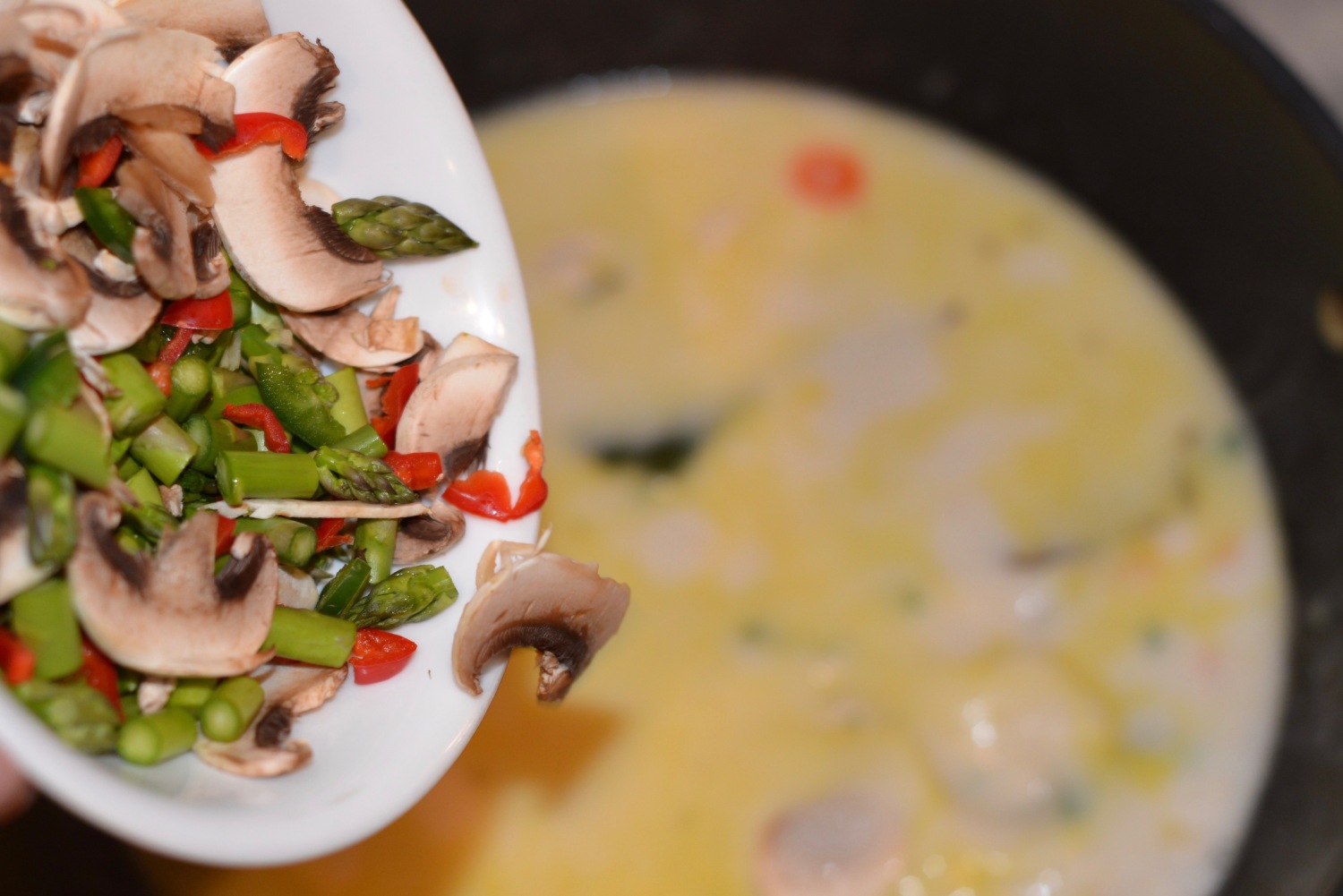
In the meantime, boil your vermicelli noodles if you’re using them. If not, steam the zucchini noodles for a couple minutes. When these are ready, strain and put them in a bowl. Add the jalapenos, red chili, mushrooms, asparagus and green onions to the pot and allow them to simmer for about one minute – you want these guys al dente.

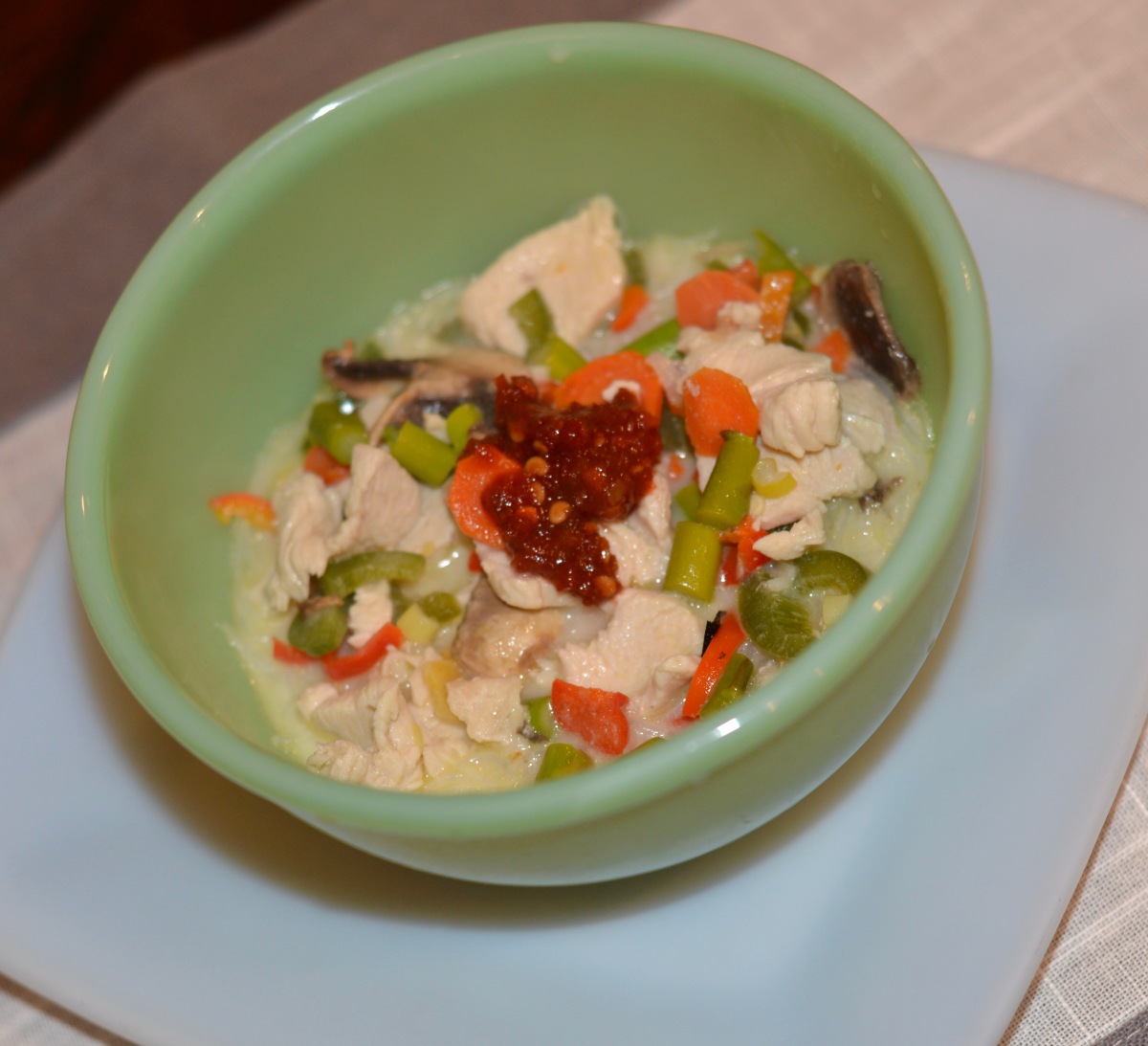
Pour the soup over the vermicelli or zucchini noodles and garnish with ample cilantro and a dollop of chili garlic paste. Enjoy!


  • Libations & Wine

Hot Toddy: the Age-Old Snowstorm Companion

amagnoliasculinarychronicles's avatar amagnoliasculinarychronicles January 7, 2018

It’s a new year. I started off with a challenging (painful) workout and some healthy eats. I stocked my fridge with greens for juicing. I was planning on a mild detox from the holidays. Then…it snowed more in the lowcountry of South Carolina than it has since 1989. Best laid plans, right.

DSC_8661

The answer? A hot toddy, of course. I aspired to not only warm the heart and soul after an outing with my husband and our munchkin, I conjured up a steaming beverage that was action-packed with cold-fighting ingredients like ginger, lavender, lemon and local honey. So, if you haven’t thawed out from this latest winter blast yet, give this concoction a try. The tart lemon, zing of ginger and bracing kick of Bourbon will definitely cures what ails ya!

Recipe makes 2 mugs

Ingredients:

  • 1 teaspoon culinary lavender
  • 1 teaspoon raw sugar (or more if that’s your preference)
  • 1 teaspoon fresh ginger, minced
  • 1 teaspoon local honey
  • 2 ounces Bourbon (or your favorite brown booze)
  • 12 ounces water
  • juice of ½ a lemon
  • thin lemon peels from ½ a lemon (save 2 for garnish)

DSC_8702

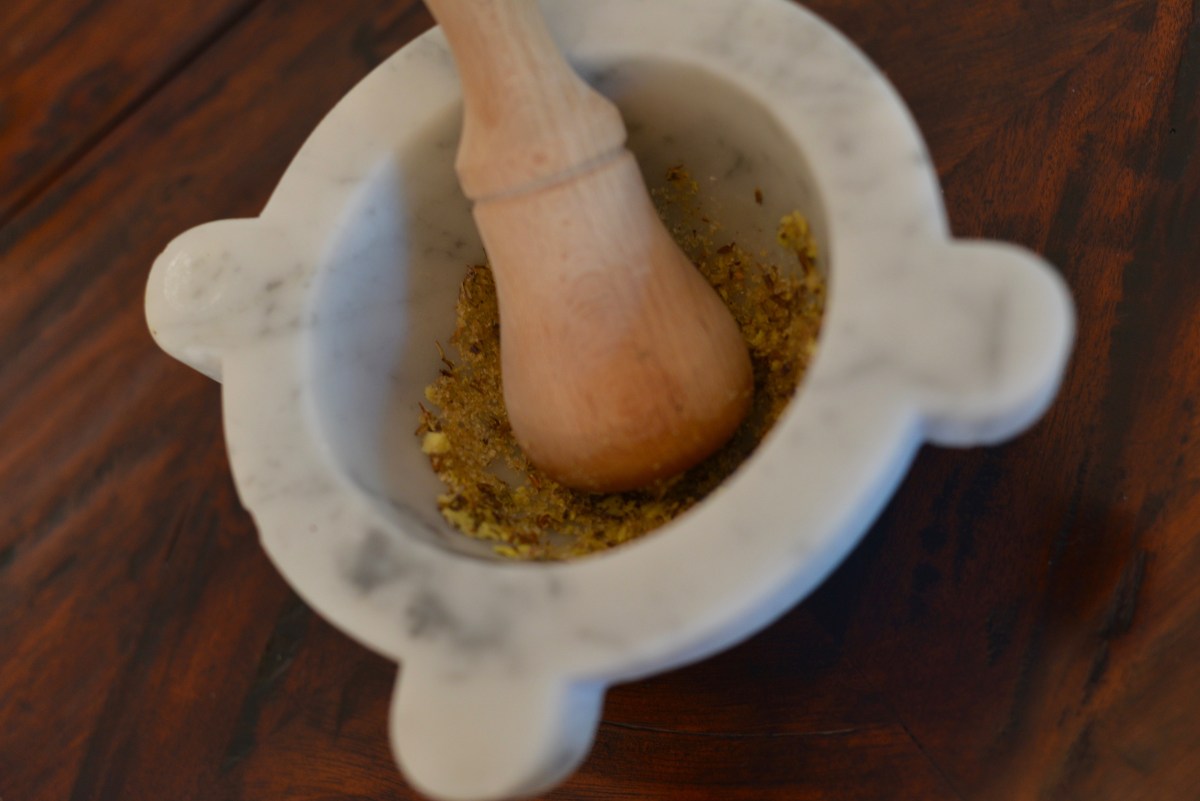
Start by placing lavender, raw sugar and ginger in a mortar then muddle it with your pestle. If you don’t have a mortar and pestle, a food processor will do the trick.

Place the dry ingredients in a saucepan then pour in honey, Bourbon, water, lemon juice and all but 2 lemon peels. Bring to a boil then turn down to a simmer. Take your 2 lemon peels and curl them around a clean pencil for a garnish twist. Let the mixture simmer for 10 minutes then strain and serve.

DSC_8709

Here’s to a warm and cozy night. Cheers, y’all!

  • Food

New Year’s Tourtière – a Québécois Feast

amagnoliasculinarychronicles's avatar amagnoliasculinarychronicles December 29, 2017

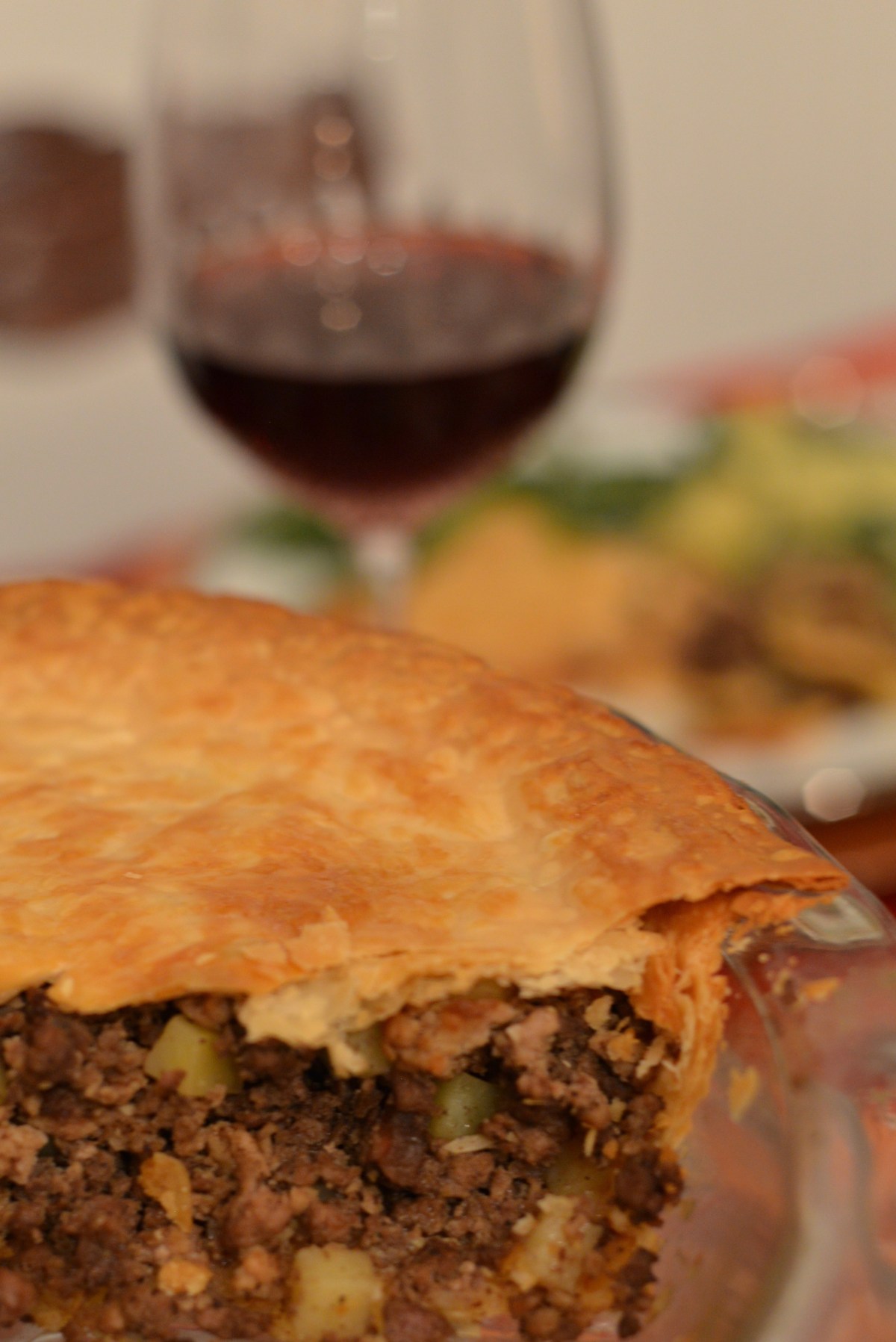
My proposed New Year’s Eve feast this year accidentally served as our Christmas dinner – long story. Either way, today’s dish, Tourtière, is a traditional centerpiece for Christmas as well as New Year’s in the Canadian province of Quebec – so why not South Carolina!? Once you try it, I guarantee you’ll crave this hearty, baking-spice-infused delicacy, year after year, whenever the weather is cold, the wine is plentiful and the company is warm.

To say that this year’s Christmas dinner was a comedy of errors would be a vast understatement. I aspired to cook the perfect Prime Rib for the big day. I planned ahead. I ordered an organic cut from my local butcher. I picked it up on time and discussed ideal storage with my knowledgeable purveyor. He recommended that I keep the meat in the fridge until Christmas morning – no need to freeze the pristine meat. I pulled that beautiful hunk of meat out around noon then unwrapped her like she was a highly anticipated Christmas gift around 4:00. The meat was turning an alarming shade of green and one sniff sent my olfactory senses into suicide watch. It was simply inedible. What to do? The stores were all closed, and I’d been cooking anything and everything within reach for our visiting family for days. Luckily, I had a pound each of ground venison and veal that I had planned to use for New Year’s Eve. Fortified by a healthy dose of Beaujolais Cru, I pressed ahead. I would make Tourtière. French Canadians bake this dish for Christmas as well as New Year’s – why not a Texan living in South Carolina!?

I experienced my first magical bite of Tourtière (Canadian Meat Pie) while my husband and I were stationed in northeastern Alberta, Canada. A friend of mine was a fiery blonde Québécoise the size of a matchstick with the intensity of dynamite who claimed to make the best Tourtière in all of Canada. We made a bargain. I would provide the wine if she would let me make her great-grandmother’s Tourtière with her. I’ll never forget the hours of preparation, fueled by wine and “moose milk,” and the immensely satisfying, first bite of French Canadian Tourtière.

DSC_8576


Although you can use any mixture of meat you prefer, from exotic game, pork to straight-up beef, I prefer to use a 50:50 combination of veal and venison. The only part of the preparation that is de rigueur is ample patience and a healthy supply of quality, quaffing wine.

The Filling:

It’s ideal to prepare the meat and potatoes a day ahead, but you can do it all in one day if pressed for time as I was this year.

Ingredients:

  • 2 potatoes, diced fine
  • 3 cloves garlic, minced
  • 2 shallots, minced
  • 1 lb. ground veal
  • 1 lb ground venison
  • ½ teaspoon ground cloves
  • ½ teaspoon nutmeg
  • a pinch of cinnamon
  • salt and pepper to taste
  • 2 twigs of rosemary, chopped fine
  • ¼ cup red wine

Mix the veal and venison by hand then season evenly with salt, pepper, cloves, nutmeg, cinnamon and 2 of the minced garlic cloves. Place uncovered in fridge for the following day. Or pat the meat thoroughly dry ahead of time if cooking everything all at once.

Dice the potatoes and season with salt, pepper, rosemary, 1 of the minced garlic cloves and the shallots then place in the refrigerator for the following day.

In a large le creuset or dutch oven, get a mixture of butter and olive just bubbling on medium-high heat. Place the meat (brought to room temp) in the pan in batches to brown. Do not crowd the meat or it will not brown. When the meat all has a nice sear, lightly brown the potatoes in the same oil. Deglaze the pan with red wine then mix the potatoes and meat in the pot evenly.

DSC_8553

Pie Dough:

For the pie dough, my go-to is always Julia Child’s recipe from Mastering the Art of French Cooking. Since time was of the essence on this go round, I hastily pulled a box of Pillsbury pie shells out of the fridge and they did just fine. They were not on par with Julia’s infallible buttery crust, but the result was still delicious. If you want to make your own dough, here’s the recipe:

  • 1 ½ cups unbleached all-purpose flour
  • ½ cup cake flour
  • ½ teaspoon salt
  • ¾ cup unsalted butter, diced and cold
  • ¼ cup lard or vegetable shortening, cold
  • ½ cup cold water
  • 1 egg, beaten (save for later)

You can either prepare this recipe by hand or in a food processor. Start by mixing the flour and salt evenly then add butter and lard/shortening and mix until it resembles rough crumbs. Add cold water and process or knead until the dough forms a ball. On a piece of parchment paper for a work surface, mold the dough into a neat ball then wrap and refrigerate for one hour. This recipe makes the equivalent of two pie shell rounds – enough for the top and bottom of the Tourtière.

Once you have formed the first round of dough into the pie dish, brush a bit of the beaten egg over the surface then spread the meat and potato mixture into the shell. Cover with second round of dough, cut slits on the top then brush an egg wash over the finished product. Cover with foil then place in the oven at 375 degrees Fahrenheit for 30 minutes. Remove the foil then cook for an additional 15 minutes or until the top of the pie has turned a golden brown.

DSC_8567

This dish is wonderful with anything from a good, red Burgundy (Pinot Noir) to a bottle of Bandol Rouge from Provence or even a right-bank Bordeaux. Whatever you decide, I recommend keeping it French!

Happy New Years and Bon Appétit!


  • Libations & Wine

Ring a Ding Ding – Bespoke Champagne Picks for New Year’s Eve

amagnoliasculinarychronicles's avatar amagnoliasculinarychronicles December 27, 2017

Nothing quite captures the sparkle, glitz and Zelda-Fitzgerald-glamour of New Year’s Eve like the bubbles in a glass of Champagne. Although famous labels like Veuve Clicquot or Pol Roger are always reliable standbys, there exists a realm of Champagne that offers a price-to-quality far beyond what you’ll find on the top shelf of your local, high-end grocery store. As I worked my way through sommelier certification years ago then went on to write for Ian Cauble’s SommSelect, the veil was lifted on this special region of France. I came to discover snapshots of Champagne’s terroir and the dedicated families who capture that magical, bubbling nectar that I never would have unearthed on my own. So, since it’s almost New Year’s Eve, I’d like to share some of my favorite vigneron families that produce Grower Champagne. It may take a bit of searching on your part, but this joyous occasion calls for something that’s truly worth the effort.

Although Grower Champagne is all the rage amongst sommeliers and Champagne aficionados, most of the American public is still unaware of the serious genius behind this homegrown movement. So what is a Grower Champagne exactly? Well, to be brief, it’s the Champagne equivalent of a genuine farm-to-table experience.

I have such an insatiable ardor for this particular subject that mere words seem to fall short. So, let’s dive into the effervescent weeds, shall we!? A Grower Champagne is a sparkling wine, grown only in the Champagne region of France, that has a tiny “RM” printed on the label; this lettering stands for Recoltant-Manipulant. What this means is that all of the grapes are grown, nurtured and harvested by the owner from only their estate and hand-crafted into a domaine-bottled wine. The wines reflect the special parcel of land from which the grapes are grown. This not only means the wine is a labor of love from an oftentimes ancient vigneron family, it is also a mouthful of terroir (or sense of place) from one of the most geologically significant swaths of land in the world. These wines represent the millennia-in-the-making, limestone-rich soil that makes Champagne Champagne and why no other region in the world can legally lay claim to its eponymy.

On the flip side, major Champagne houses, or Grande Marques, craft their signature style and blends from hundreds, to even thousands, of growers’ vineyards. Grande Marques are labeled as NM, which stands for Négociant-manipulant. Although they achieve a style and taste profile, year after year, that we come to expect, they rarely convey the inimitable fingerprint of the land and meticulous farming practices of a Grower Champagne. The Grande Marques do craft single-vineyard wines and special vintage bottlings, but these wines demand well over $100 a bottle at a bare minimum. Grower Champagnes, on the other hand, offer their tête de cuvées (top bottlings) at a much more affordable price tag and often capture a complexity that is simply mind-blowing. If that doesn’t roll your socks down, consider this – Grower Champagnes are expertly and meticulously crafted by Mom and/or Pop who oftentimes have been nurturing their land for decades or even centuries. It’s their labor of love and the results are often bespoke examples that will change the way you look at Champagne forever. Although I relish drinking a tête de cuvée from a grand old Champagne house, my heart will always belong to the small grower-producers, the true artisans like Christian Coquillette, André Clouet and Francis Egly. So, without further adieu, here are a handful of my favorite Grower Champagnes.

 DSC_8588

Champagne Saint-Chamant, Blanc de Blancs, Grand Cru, Brut, 2006

Saint-Chamant is, hands-down, my personal favorite grower-producer of Champagne. Grand old man and octogenarian, Monsieur Christian Coquillette, has been handcrafting world-class Champagne from his labyrinthine, 19th century cellars since the 1950’s where he still hand-labels every single bottle. He meticulously farms his Grand Cru fruit from the Roche Mere, a mother rock of kimmeridgian limestone, and lays his hand-harvested fruit to rest for extended lees aging, which results in brioche-laden richness that is sheer heaven on the palate. This vintage Champagne is a blanc de blancs, which means it is a white wine crafted from 100% Chardonnay. A lip-smacking sensation of dried lemon peel and baked yellow apple evolves into a waltz of beautiful hazelnut purée, freshly baked brioche, honeysuckle, subtle creaminess and one of the most haunting displays of limestone minerality to ever be cradled in a glass. Although 2005 and 2006 were two of my favorite vintages, every example in Monsieur Coquillette’s lineup will truly dazzle you senseless. If this champagne doesn’t change your life, I don’t know what will!


Champagne Egly-Ouriet, Grand Cru, Brut Tradition, NV

No list of Grower Champagne is complete without Egly-Ouriet. Arguably the first Grower Champagne to seize the heart of the American market, fourth-generation vigneron Francis Egly delivers organically-grown fruit from the Grand Cru villages of Ambonnay, Bouzy and Verzenay at a price-to-quality that knows few rivals. The blend of 70% Pinot Noir and 30% Chardonnay delivers a sensory journey of yellow apple, blood orange and salted pear that expands over the palate to encompass notes of nuttiness, a hint of caramel and lithe minerality. This wine is quite a steal for the profundity found in the bottle, but Egly’s entire lineup is simply spectacular!

DSC_8591 

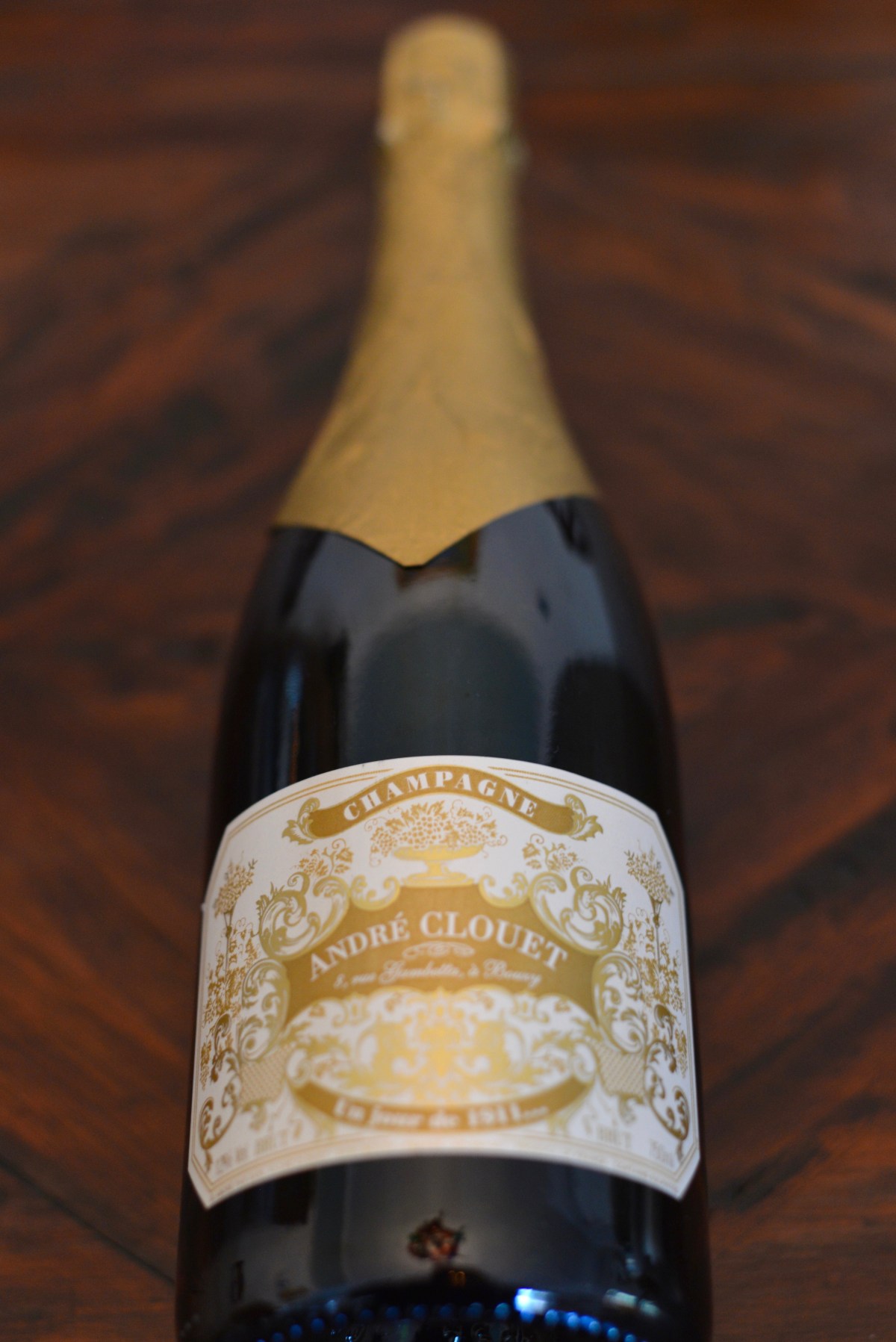
André Clouet, “Cuvée 1911,” Grand Cru, Brut, NV

While André Clouet’s lengthy family narrative is as compelling as a juicy period drama, his wine more than lives up to the legacy. The family’s storied, winding chalk cellars once included partial false walls to protect their more precious bottles from raiding Nazis, but that’s only their modern history. The ancient vigneron family was once the official printer to the court of Louis XV – hence the beauty of the label. André still calls the Clouet’s 17th century estate home. True to his pedigreed lineage, Clouet adheres to time-honored tradition when crafting his Champagnes from the lauded Montagne de Reims region. This particular bottling is sourced from the greatest of the family’s parcels of Pinot Noir in the Grand Cru village of Bouzy. Only 1911 bottles are produced each year and the wine ages for a staggering six years on its lees (spent yeast) before disgorgement, which results in an aroma of freshly baked croissant that envelops the bright, crisp red berry fruit like a cloud of sheer magic. Although this magnificent example of Pinot-based Champagne is considered the family’s tête de cuvée, each bottling across their lineup is a profound reflection of their treasured corner of Champagne down to the stunning entry-level Grande Réserve.

Diebolt-Vallois, Blanc de Blancs, Prestige Brut, NV

Although the Diebolt family has roots in the village of Cramant that reach back to the 19th century and the Vallois family has cultivated vines in Cuis since the 15th century, it wasn’t until Jacques Diebolt and Nadia Vallois tied the knot in the 1970’s that this now-lauded Champagne label was born. Today their children, Arnaud and Isabelle, have joined them in the running of their world-class estate. This particular wine is a blanc de blancs (100% Chardonnay) that is sourced entirely from Grand Cru villages (Cramant, Chouilly and Le Mesnil sur Oger) in the celebrated Côte des Blancs – a pocket of Champagne known for its unrivaled Chardonnay. The result of their meticulous efforts reveal a wine of brioche-laden nectar that lingers on the palate with notes of yellow apple, lemon zest, hazelnut and a touch of fresh cream that finishes with striking minerality that we all crave from the best Champagnes in the world. Simply perfection!

DSC_8592

*Although tall slender Champagne flutes undeniably have a great look, aesthetics is about all that can be said for them. The thin opening of the glass inhibits the aromatics of a great Champagne to the point that you might as well be sipping out of a Dixie cup when it comes to the sensory experience it offers. Instead, opt for either an open-mouth, tulip shaped Champagne flute, or simply reach for an all-purpose white wine stem to experience these beautiful wines in their full glory.

** For service temperature, don’t ice these babies down. They need to be a touch warmer to express all that they have to say. Ideal service temperature is between 50 and 60 degrees Fahrenheit. Simply pull from the fridge 20 minutes before serving and ease the cork from the bottle to allow the wine to catch its breath.

Bonne Année, y’all! Cheers!

  • Food

‘Twas the Night Before Christmas Pozole

amagnoliasculinarychronicles's avatar amagnoliasculinarychronicles December 22, 2017

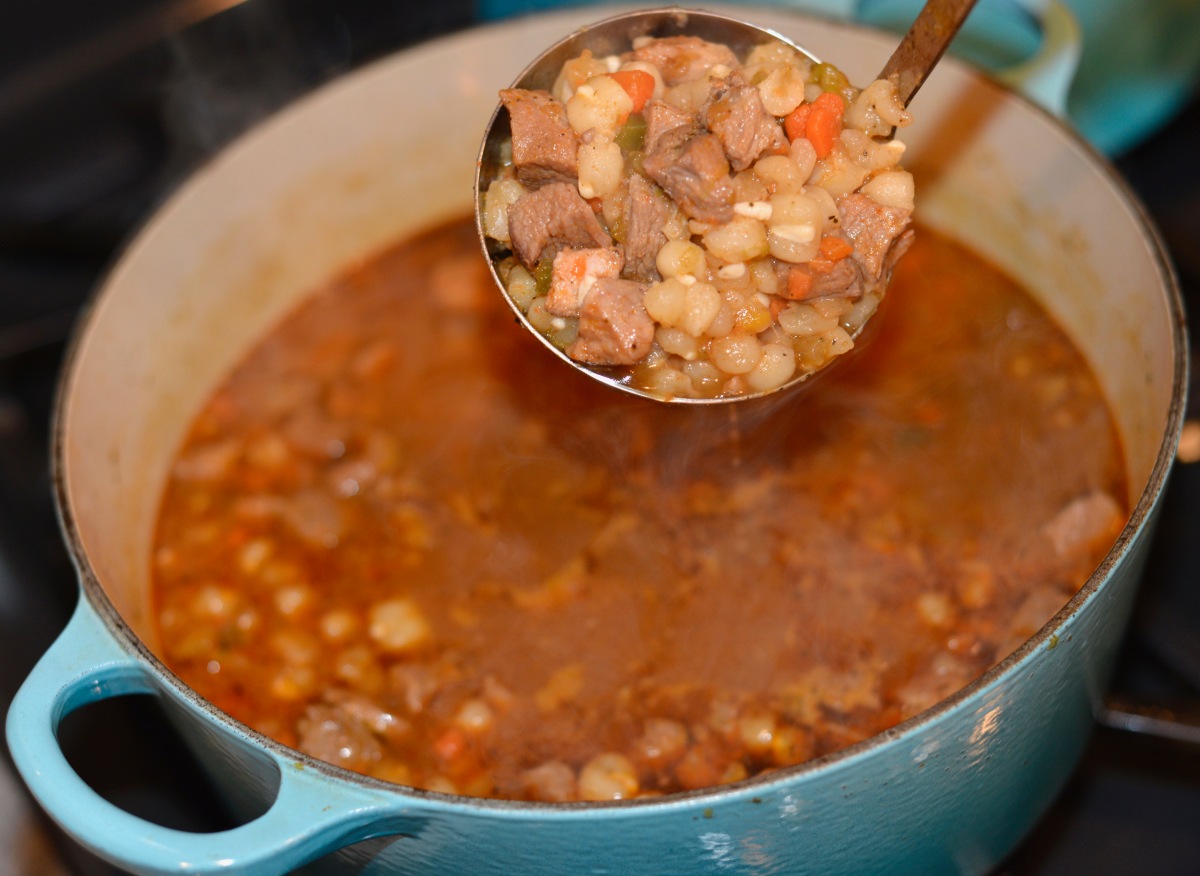
Baby, it’s Cold Outside! The remedy: a soul-melting Christmas Eve Pozole that’s as rich as Deano’s voice with enchanting aromatics destined to become a family holiday classic.

The fragrance of this delicious stew triggers memories of a very special chapter in my life. It was a period of renewal, tranquility and incredible inspiration. On my year long sabbatical from Hollywood, I lived in the green chile-infused high desert of Santa Fe, New Mexico. Pozole (aka Posole), a heart-warming dish served in homes and restaurants all over the ‘Land of Enchantment,’ kept me cozy through future Canadian winters and always sent me back to my windswept youth in west Texas.

Although I haven’t resided within the bounds of the Lone Star state in well over a decade, I’m a born and raised Texan. That means we eat Mexican food on Christmas Eve. Tamales are mandatory for good reason – the good ones are like a corn husk-wrapped present that makes your mouth leap for joy – perfect for the anticipation of Santa’s arrival. My year in New Mexico forever altered my traditional Christmas Eve main entrée to accompany the tamales. I started making Pozole every year and over time, I’ve made the recipe my own and it’s become a welcomed and anticipated staple. This was only reinforced when our family friend down in Punta Mita, Mexico explained to my dubious parents that Pozole is actually a Mexican Christmas tradition.

Pozole is also one of my favorite pairing partners with Cabernet Franc from France’s Loire Valley. The pork dances a magnificent salsa with the tannins, the green chiles elevate the varietal’s pyrazines (the wine’s roasted chile characteristic) to a state of sheer nirvana while the crunch of jalapeño, carrot and cilantro on top lends the perfect texture to this captivating wine. I recommend examples from the villages of Chinon and Bourgueil – look for producers, Olga Raffault or Bernard Baudry for an incomparable treat!

So, without further adieu…

Ingredients:

  • 2 pounds pork shoulder, chopped and trimmed
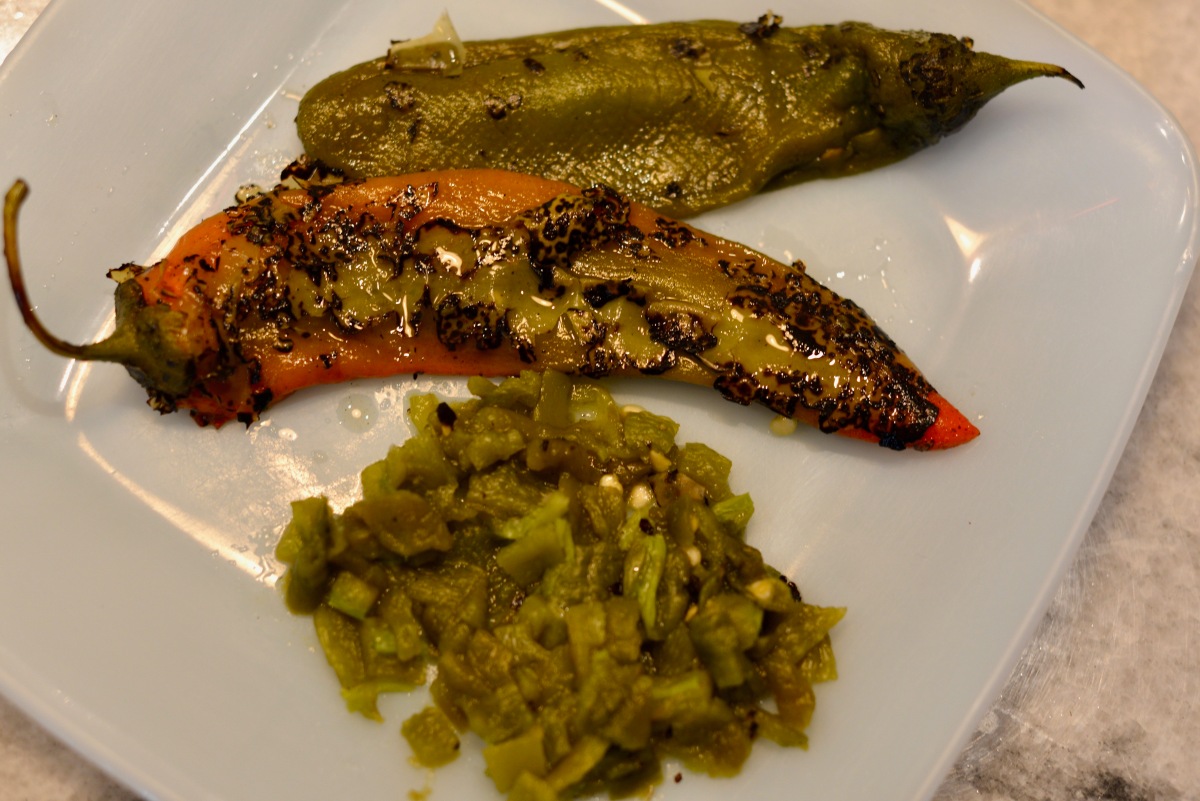
  • 1 cup roasted green chiles, diced (preferably from Hatch, New Mexico)
  • 2 garlic cloves, minced
  • 2 carrots, peeled and minced
  • 2 celery stalks, peeled and minced
  • 1 shallot, minced
  • ½ Tb rubbed sage
  • 1 Tb cumin
  • 1 cup water
  • 4 cups chicken stock
  • olive oil
  • salt and pepper
  • 3 cans hominy, rinsed and drained

 for the chile paste:

  • 4 dried New Mexican red chiles (preferably from Hatch, New Mexico)
  • 1 garlic clove, peeled and smashed
  • 1 shallot, peeled and quartered
  • 1 bay leaf
  • 10 black peppercorns
  • 1 tsp salt
  • 1 cup of water

 for bouquet garni (place in a tied cheesecloth or a tea ball):

  • 7 black peppercorns
  • 3 whole cloves
  • 7 coriander seeds
  • 2 bay leaves

for the garnish:

  • 1 jalapeno, minced
  • 1 carrot, minced
  • cilantro, finely chopped

Start out with the chile paste. This is the secret to the magic of traditional Pozole. Do not skip it. Do not buy it. Take the time to make it – it’s worth it! Brown the dried red chiles in a pan then add the remaining ingredients. Bring to a boil then immediately turn to low and simmer for 30 minutes or until the liquid reduces to a third. Pour contents into a food processor, puree and set aside.

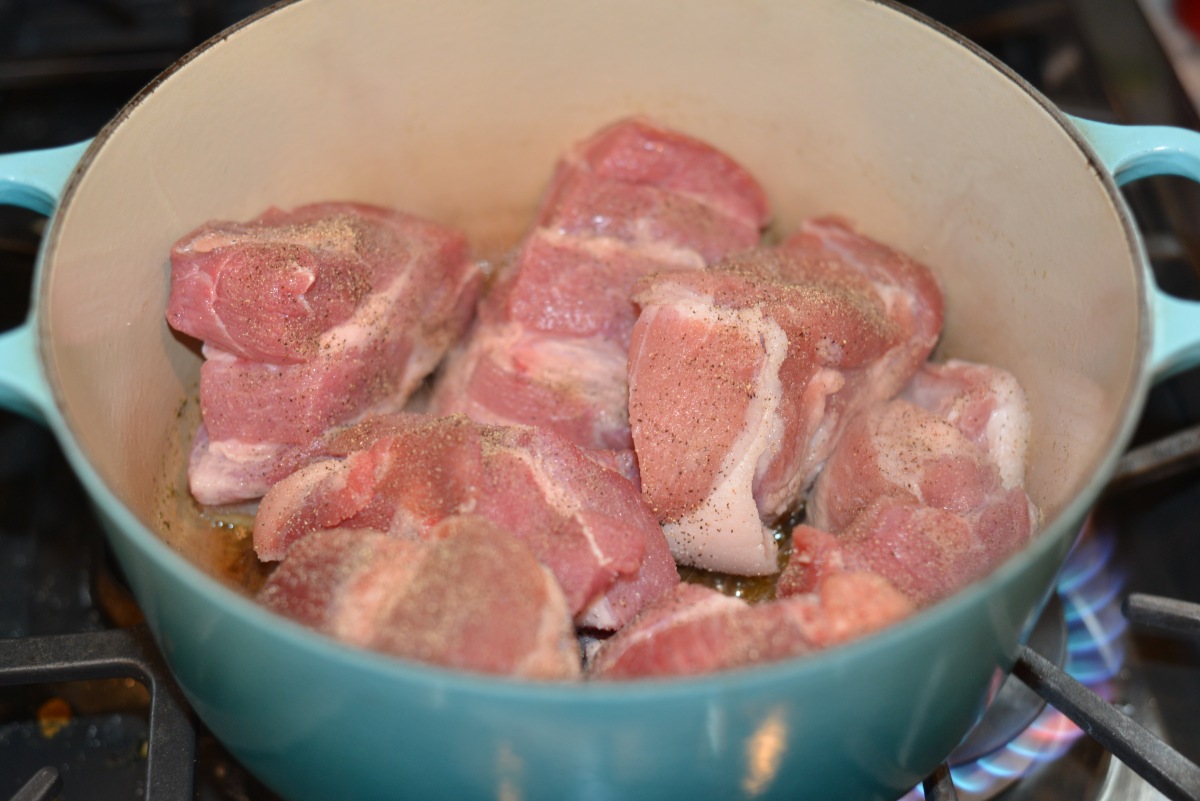
In the meantime, trim and chop the pork then dry the meat thoroughly. Season with salt and pepper. Coat a dutch oven with olive and place over medium-high heat. When the oil is hot, brown the pork on each side for roughly three minutes then place in a colander to drain.

DSC_8502

In the olive oil, scrape up the brown bits and sauté minced carrot, minced celery stalk and minced shallot then add to the colander to drain as well. Bring the chicken stock to a boil then add the bouquet garni, sage, cumin, red chile puree, pork and sautéed vegetables. Cover the contents with water, return to a boil and immediately turn the burner to low for a three-hour simmer. Then add the chopped, roasted hatch green chiles for the long simmer ahead.

DSC_8507

The last twenty minutes, add the hominy. If you’re pressed for time, you can cook at medium-low for one hour, but the meat will not be quite as tender. This dish can also be prepared ahead of time and is just as wonderful, if not better, the next day. Serve in bowls and top with fresh minced carrot, jalapeno and cilantro.

DSC_8542

* I personally buy all the roasted hatch green chiles my freezer can handle when they are in season. If you can’t get your hands on them, you can put canned green chiles in the Mexican food section of your local grocery store. If you opt for this, supplement the stew with one minced jalapeno for the added kick. Regardless, green chiles are absolutely necessary. If you want to buy roasted hatch green chiles online, you can order them at https://www.hatch-green-chile.com/product-category/frozen-hatch-green-chile/, although they are MUCH cheaper in the grocery store when they are in season.

* Dried red chiles from Hatch, New Mexico can be ordered online at https://www.newmexicochileandristra.com/Hatch-NM-Sun-Dried-Red-Chile-Pods-Available-in-Big-p/hccp.htm or purchased at Central Market in Texas.

Comer Hasta! Feliz Navidad, y’all!


  • Libations & Wine

The Jolliest Holiday Lubricant

amagnoliasculinarychronicles's avatar amagnoliasculinarychronicles December 15, 2017

Bring some liquid holiday cheer to your next Christmas soiree.

Read More "The Jolliest Holiday Lubricant"

Posts pagination

Previous 1 2 3
Blog at WordPress.com.
  • Subscribe Subscribed
    • A Magnolia's Culinary Chronicles
    • Join 27 other subscribers
    • Already have a WordPress.com account? Log in now.
    • A Magnolia's Culinary Chronicles
    • Subscribe Subscribed
    • Sign up
    • Log in
    • Report this content
    • View site in Reader
    • Manage subscriptions
    • Collapse this bar
 

Loading Comments...